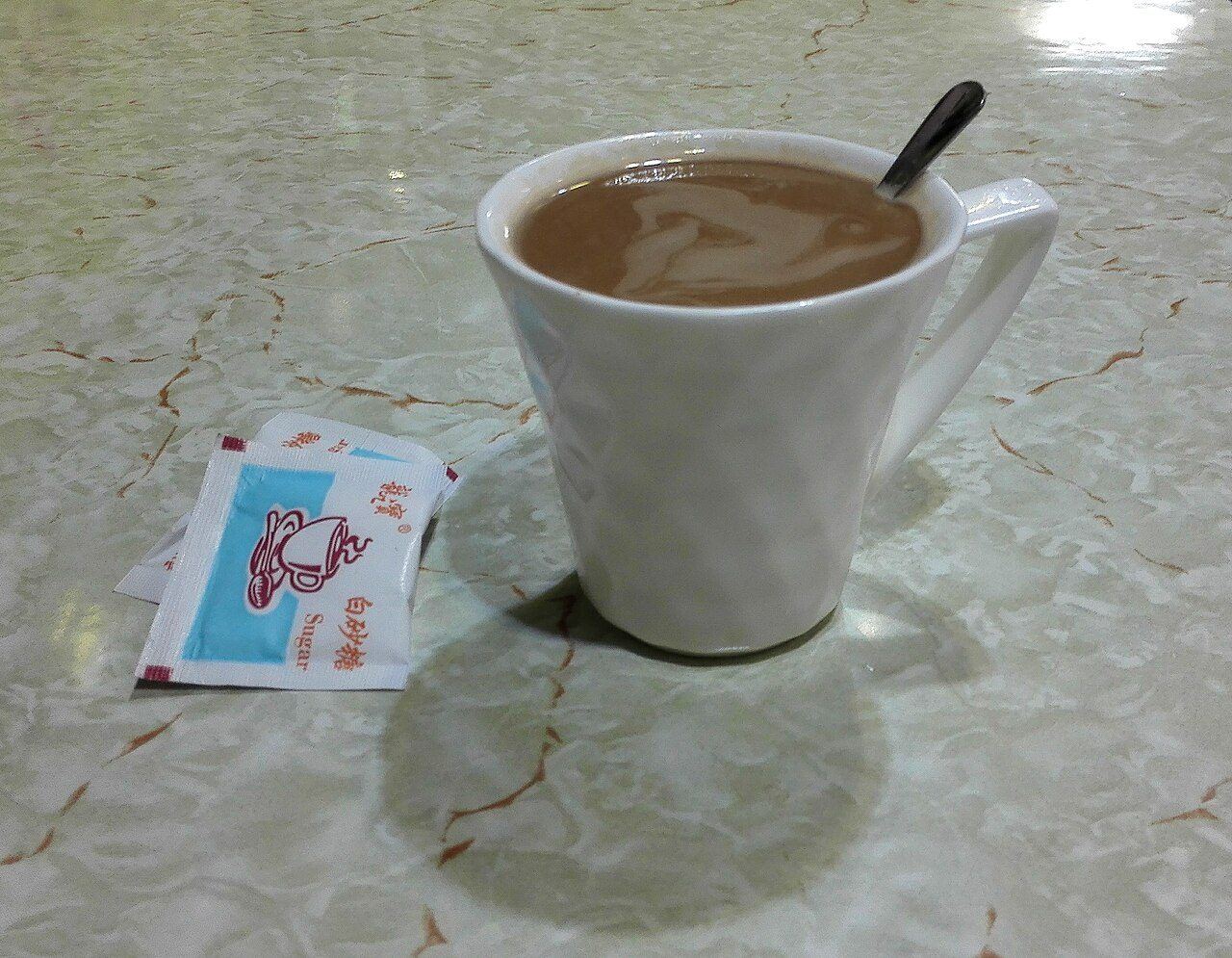
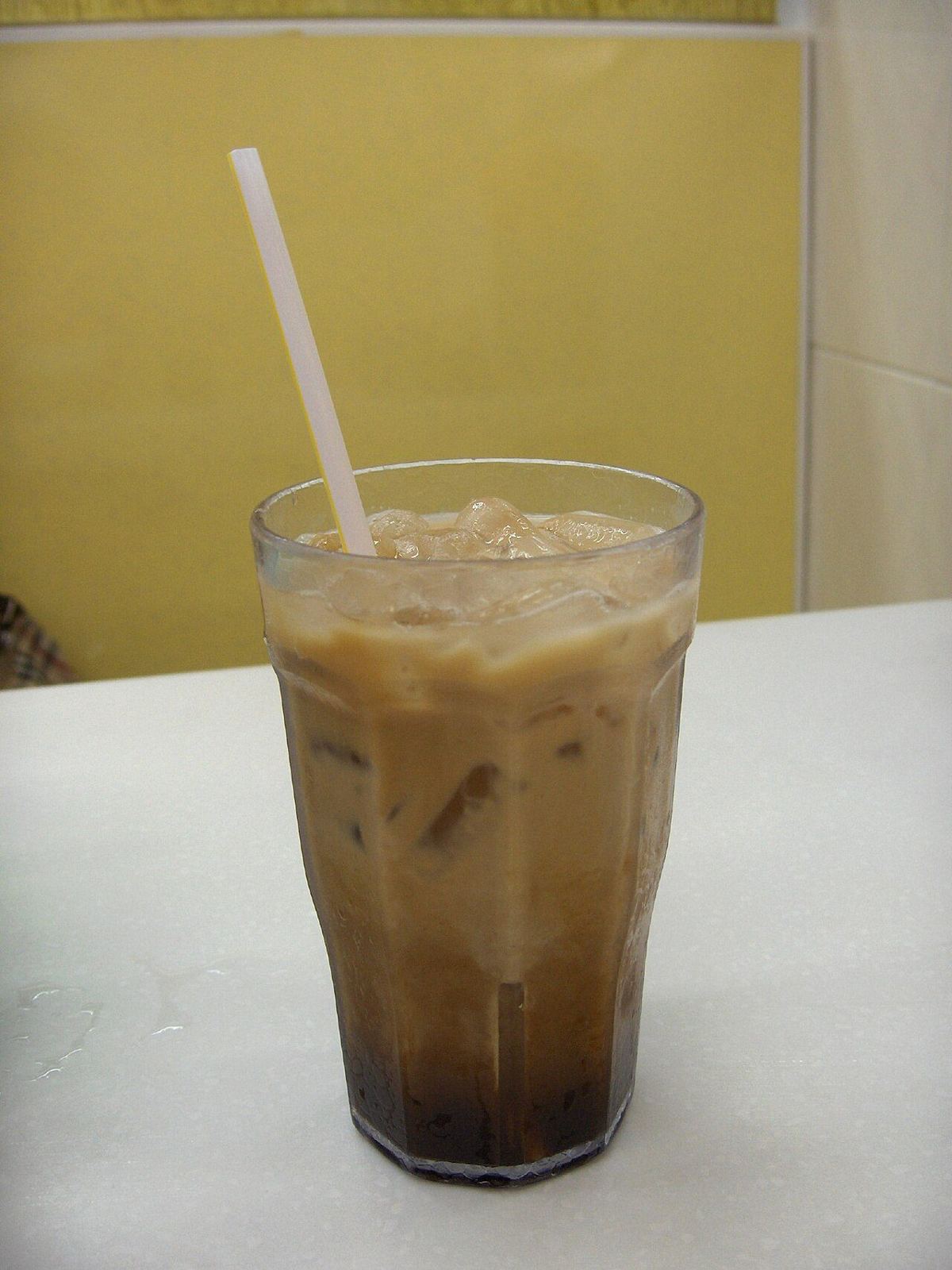
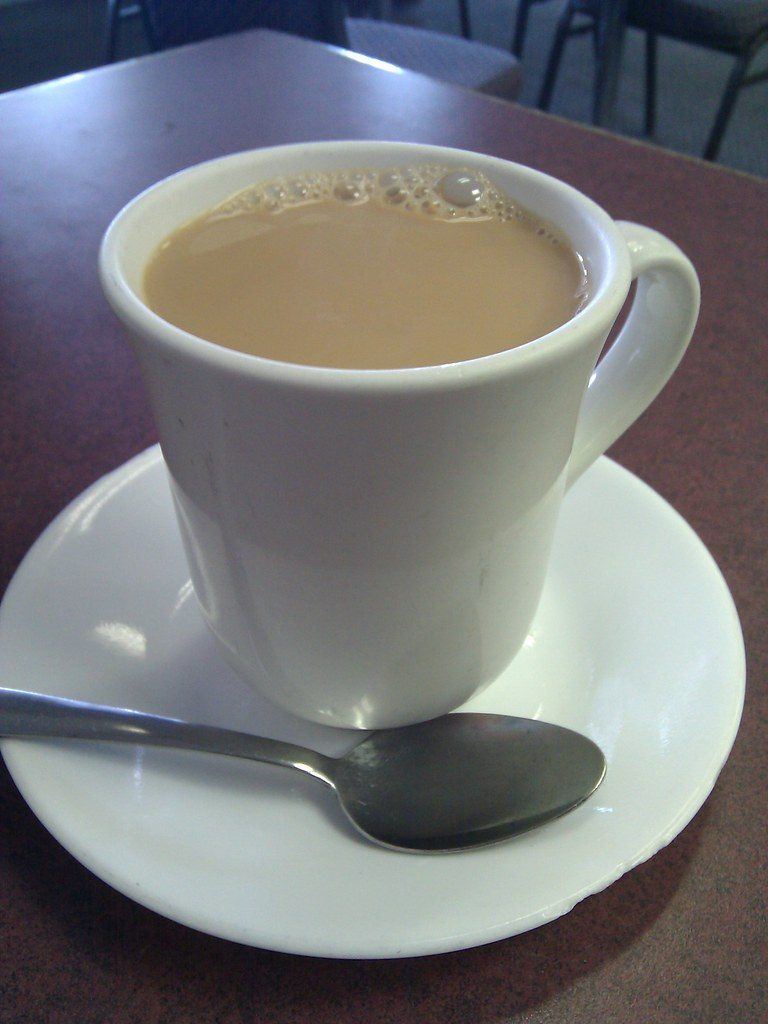
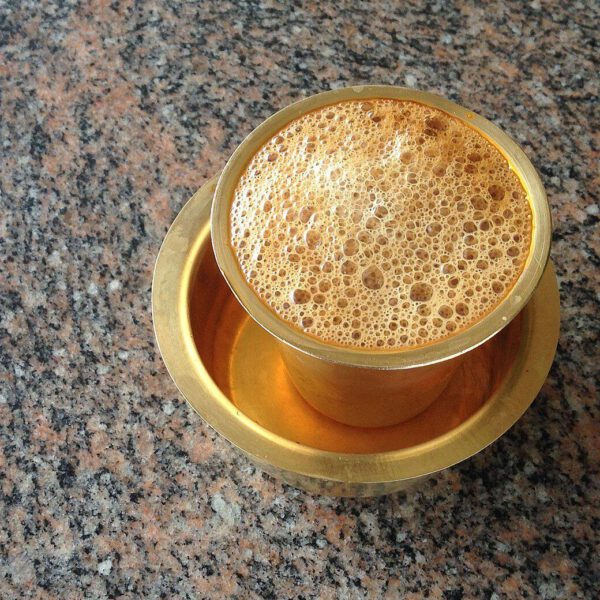
A Hong Kong cha chaan teng staple that mixes coffee with Hong Kong-style milk tea – strong black tea with evaporated milk – usually about three parts coffee to seven parts tea. Creamy, sweet and stronger than either alone.
ServedHot & Iced
In EnglishCoffee with milk tea
TastesCreamy, Smooth, Sweet
About Yuenyeung
Yuenyeung is what happens when Hong Kong refuses to choose between coffee and tea. Strong coffee is mixed with Hong Kong-style milk tea – a robust black-tea brew strained through a fine cloth “silk stocking” and made creamy with evaporated milk – and sweetened to taste. The result is smooth and milky, with the tea’s tannic grip up front and a bitter, roasty coffee finish.
The name means mandarin ducks: the male and female look completely different yet are always seen together, a traditional symbol of a devoted couple. It is a fitting picture for two very different drinks that work well as a pair.
You will find it in almost every cha chaan teng, Hong Kong’s no-frills tea cafés, and at the remaining dai pai dong street stalls, ordered hot with breakfast or iced on a sticky afternoon. Recipes vary from café to café; the Hong Kong government’s cultural department gives the classic proportion as three parts coffee to seven parts milk tea.
what’s inside
In the cup
Evaporated milk20%
Black tea50%
Coffee30%
Ingredients
Strong black tea (Ceylon blend), loose leaf2 tbsp
Water for the tea250 ml
Evaporated milk60 ml
Strong dark-roast coffee, freshly brewed100 ml
Sugar or condensed milkto taste
Ice (for the iced version)1 glass
make it at home
How to make it
You needSmall saucepan, fine cloth tea strainer (or fine sieve), coffee maker
Ratio3 parts coffee to 7 parts milk tea (Hong Kong LCSD figure); 50/50 is also common
01
Simmer the tea leaves in the water for a few minutes – not much more than five, or it turns bitter.
02
Strain through a fine cloth or sieve, pouring the tea back through the leaves a few times from a height to smooth it.
03
Stir the evaporated milk into the hot tea to make Hong Kong-style milk tea.
04
Brew a strong cup of coffee.
05
Combine about 3 parts coffee with 7 parts milk tea and sweeten to taste.
06
Drink hot, or let it cool slightly and pour over ice.
the story
Origin & history
Yuenyeung grew up alongside Hong Kong-style milk tea at the city’s dai pai dong (licensed open-air food stalls) and cha chaan teng. Milk tea itself developed in the mid-20th century under British rule as a local take on afternoon tea, using cheaper, richer evaporated milk instead of fresh milk; it spread widely through cha chaan teng in the 1960s.
Lan Fong Yuen, a stall-turned-café in Central, says its owner Lum Muk-ho invented both silk-stocking milk tea and yuenyeung in 1952. The milk-tea claim is widely accepted, but the yuenyeung claim is unverified and the true origin is unclear.
Hong Kong-style milk tea making technique has since been recognised as part of Hong Kong’s intangible cultural heritage, and industry estimates put the city’s milk tea consumption at around 2.5 million cups a day – a good share of them mixed with coffee.
same idea, different cup
Variations
Dung yuenyeungiced yuenyeung (Hong Kong)
Children’s yuenyeungHorlicks mixed with Ovaltine, no caffeine (Hong Kong)
Kopi chamcoffee mixed with tea, the Malaysian equivalent (Malaysia)
Yuen Yeung Frappuccinoa blended version sold by Starbucks in Hong Kong and Macau in summer 2010 (Hong Kong)
like a local
Good to know
It is often missing from the printed menu, but almost every cha chaan teng will make it.
Many cafés sweeten it before serving – ask for less sugar if you prefer.
No caffeine? Children's yuenyeung (兒童鴛鴦) mixes Horlicks and Ovaltine instead.
In Malaysia a similar coffee-and-tea mix is called kopi cham.