South Indian Filter Coffee
Filter kaapi (Tamil: ஃபில்டர் காபி) Say FIL-ter KAA-pee
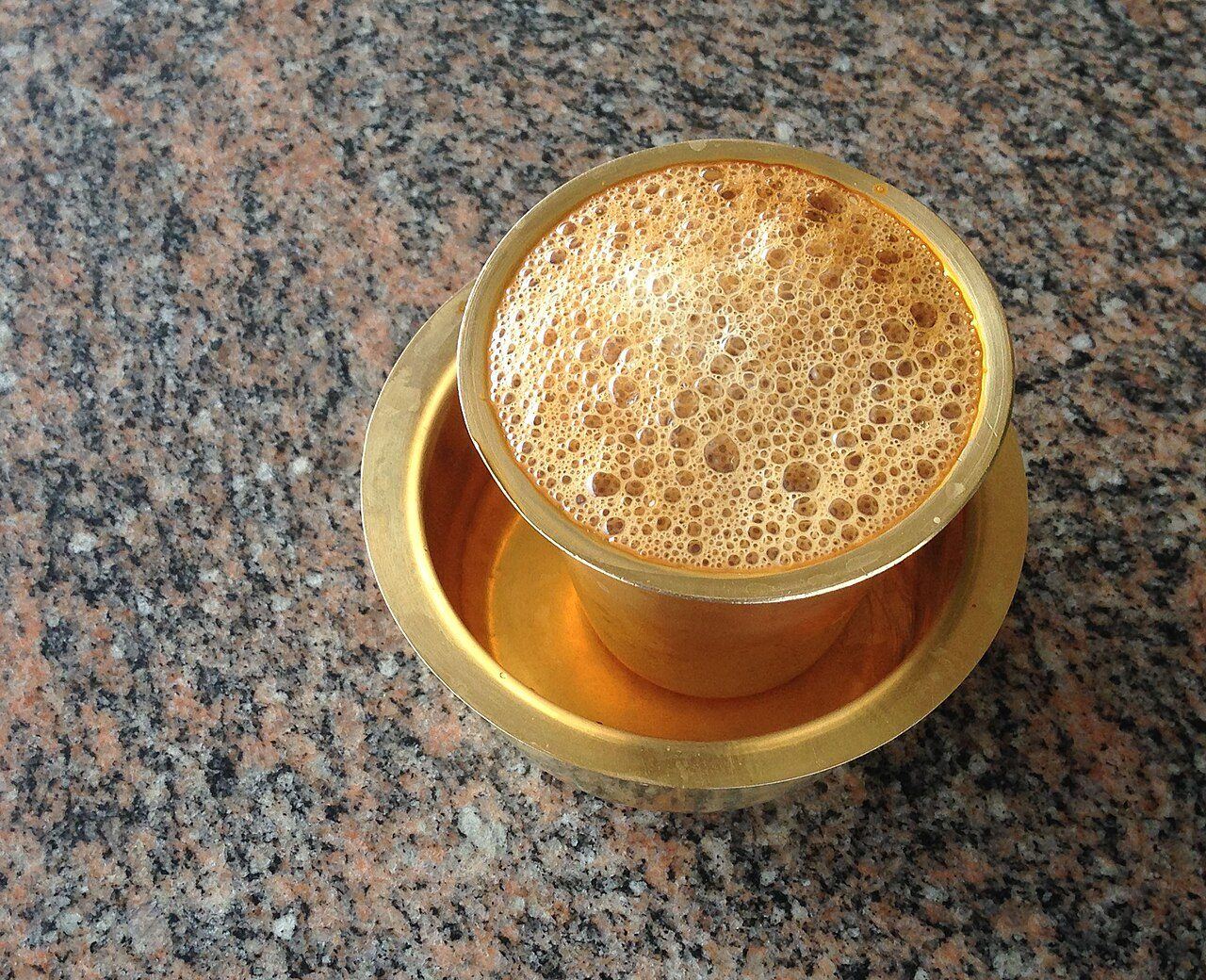
South India's daily ritual: a thick decoction dripped from finely ground coffee and chicory in a two-tier steel filter, mixed with hot boiled milk and sugar, and frothed by pouring it in long arcs between a tumbler and a dabara.
- ServedHot
- In EnglishFilter coffee with milk
- TastesBold, Creamy, Sweet
About South Indian Filter Coffee
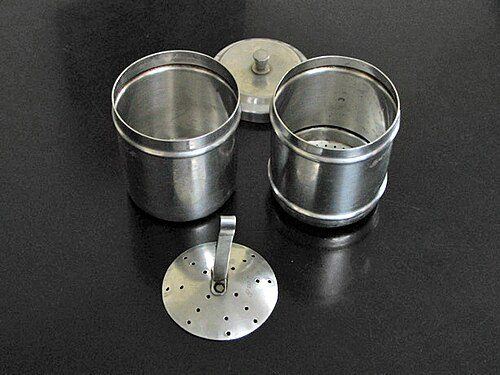
Filter kaapi is the everyday coffee of Tamil Nadu, Karnataka, Kerala and Andhra Pradesh. Finely ground dark-roast coffee, usually blended with some chicory, is packed into the top half of a stacked steel filter. Boiling water drips through it slowly into the lower half, producing a small amount of very strong “decoction”. A spoonful or two of that goes into a steel tumbler with sugar and is topped up with milk that has just come to the boil.
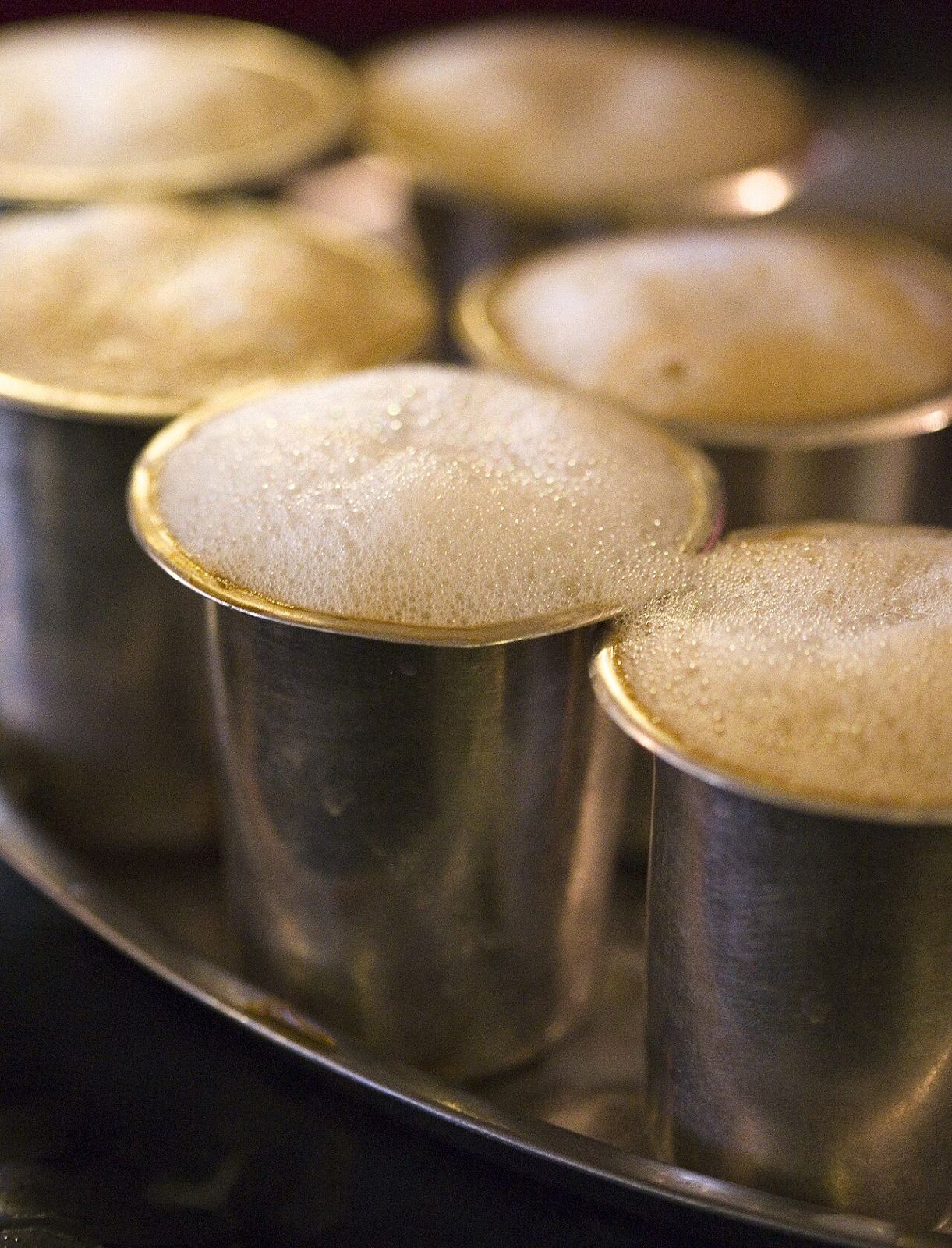
Then comes the theatre: the coffee is poured back and forth between the tumbler and a wide, lipped steel bowl called a dabara (or davara), in ever higher arcs, until it is cool enough to drink and crowned with froth. The taste is strong, sweet and milky, with the faint bitterness and body that chicory brings.
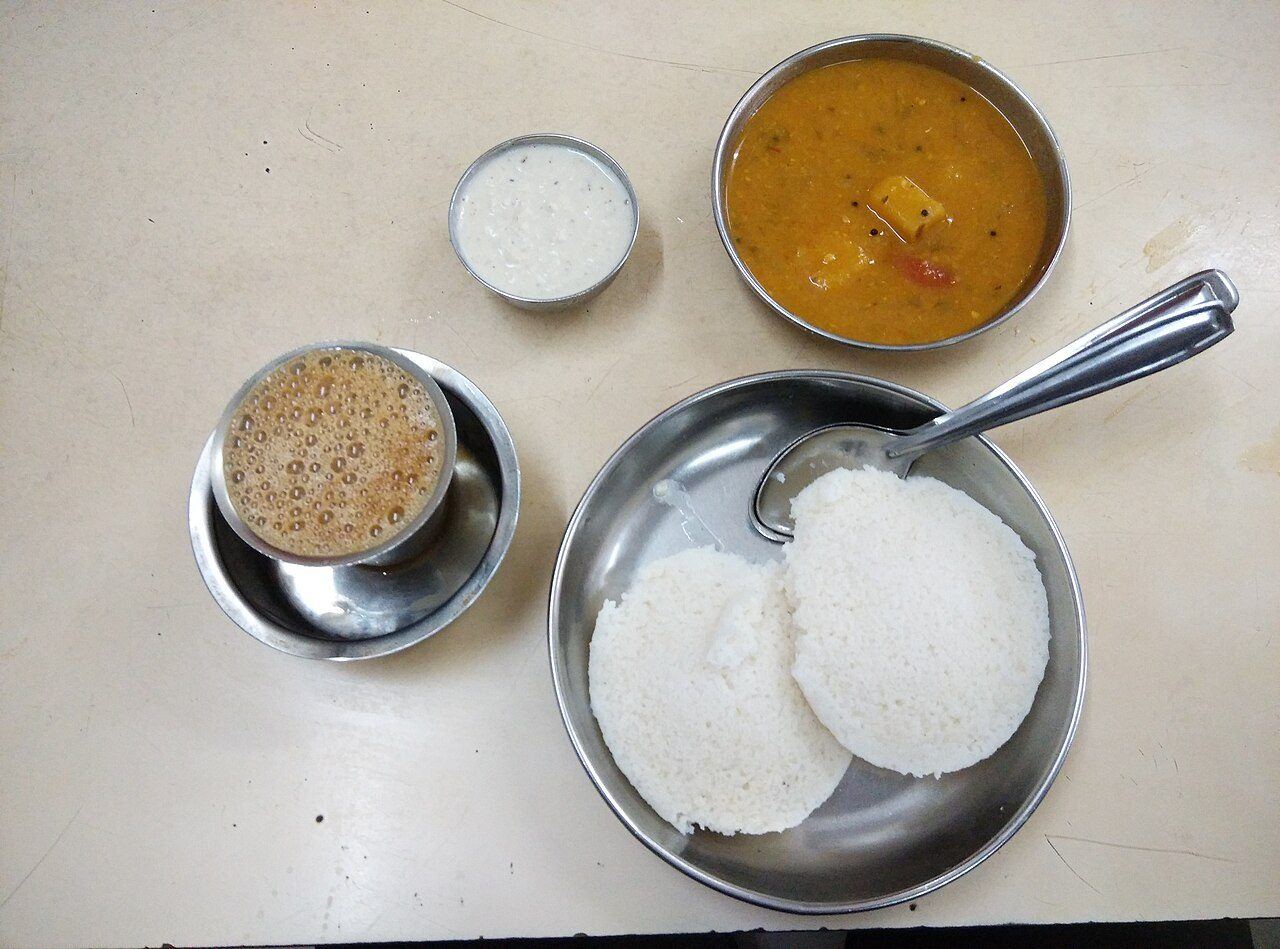
Many families brew a fresh decoction every morning, and it is served in homes, temple-town “hotels”, breakfast tiffin places and the Indian Coffee House chain. Ask for “strong” if you like it punchy.
In the cup
- Froth 15%
- Hot boiled milk 60%
- Coffee decoction 25%
Ingredients
- Filter coffee powder (coffee–chicory blend), ground fine3 tbsp
- Boiling waterenough to fill the upper chamber
- Whole milkabout 150 ml per cup
- Sugar1–2 tsp, to taste
How to make it
You needSouth Indian coffee filter (two stacking steel cylinders with a pressing disc), saucepan, steel tumbler and dabara
Ratio1–2 tbsp of decoction per tumbler, topped up with hot milk – adjust to taste
-
Spoon the coffee powder into the perforated upper chamber and level it; set the pressing disc on top without tamping hard.
-
Pour boiling water into the upper chamber, close the lid and leave it to drip for 10–15 minutes.
-
Meanwhile bring the milk to the boil.
-
Put 1–2 tbsp of decoction and the sugar into a tumbler, then top up with hot milk.
-
Pour the coffee back and forth between the tumbler and dabara in high arcs until frothy and drinkable.
Origin & history
Coffee drinking in India goes back at least to the early 1600s, when Mughal records and travellers describe coffeehouses in Delhi. A popular legend credits the Sufi saint Baba Budan with smuggling seven coffee beans from Mecca and planting them in the hills of Chikmagalur in Karnataka – now called Baba Budangiri. The date is uncertain: it is usually put around the mid-17th century, though some accounts say earlier.
The British East India Company set up coffee plantations in Coorg (Kodagu) in the late 1700s, and by the end of the 19th century coffee had become an everyday drink for ordinary South Indians. Chicory was added to the powder, supposedly for medicinal reasons, and sugar or jaggery softened the strong brew.
White sugar largely replaced jaggery and honey from the mid-1900s, and the Indian Coffee House chain, popular from the mid-20th century, helped carry filter kaapi beyond the south.
Variations
- Degree coffeemade with the first, strongest decoction and pure milk; “degree” was a mark of quality (Tamil Nadu)
- Jaggery filter coffeesweetened with jaggery, the traditional pre-sugar sweetener (South India)
- Pure filter coffee100% coffee with no chicory, cleaner but less full-bodied (South India)
Good to know
Pour between the tumbler and dabara to cool it and build froth – then drink from the tumbler.
Steel conducts heat, so hold the tumbler by its rim.
Coffee often arrives already sweetened – ask for less or no sugar when you order.
Buying powder to take home? Packs list the coffee-to-chicory ratio; less chicory means a cleaner, more coffee-forward cup.
The decoction is stronger than espresso, so start with a little and add more.