Turkish Coffee
Türk kahvesi Say turk kah-VEH-see
Powder-fine coffee, cold water and (optionally) sugar heated slowly in a cezve until it foams, then poured unfiltered into a small cup. Rich, thick and strong, it is served with water and often lokum. UNESCO-listed since 2013.
- ServedHot
- In EnglishTurkish-style unfiltered coffee
- TastesBitter, Bold, Rich
About Turkish Coffee
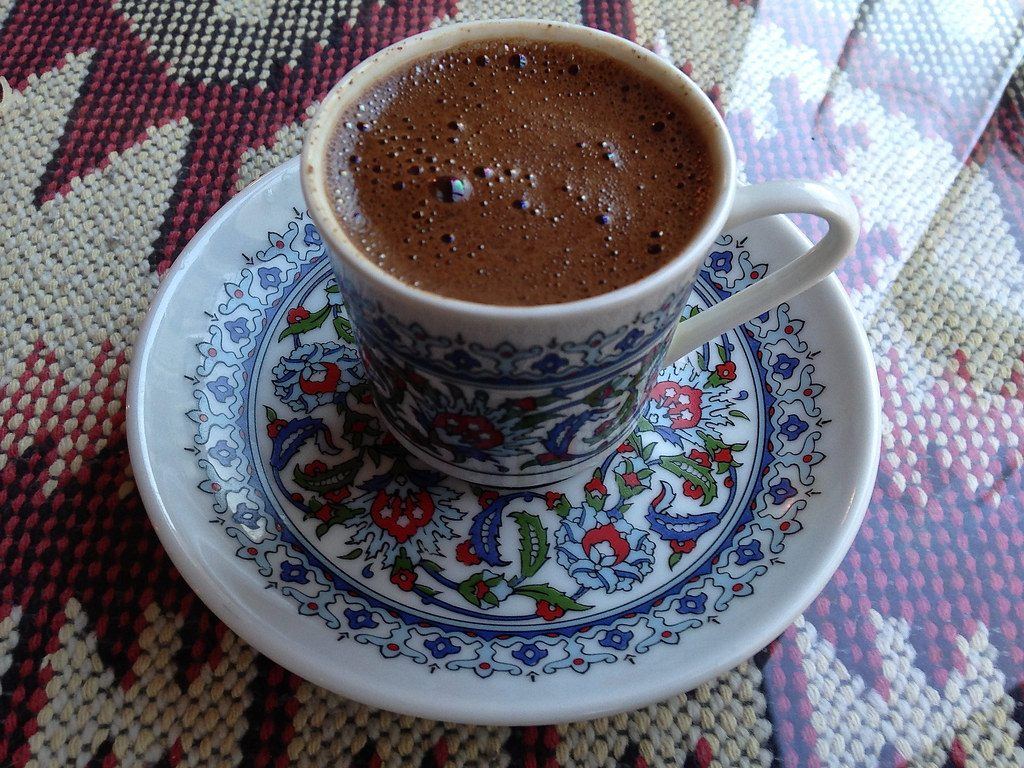
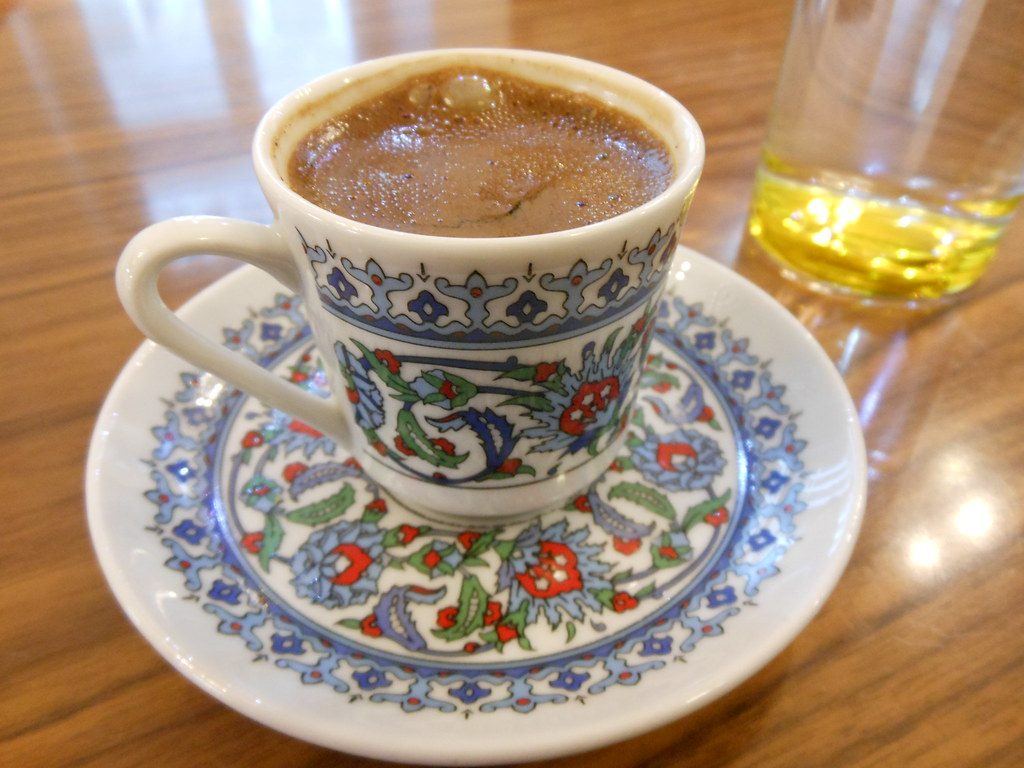
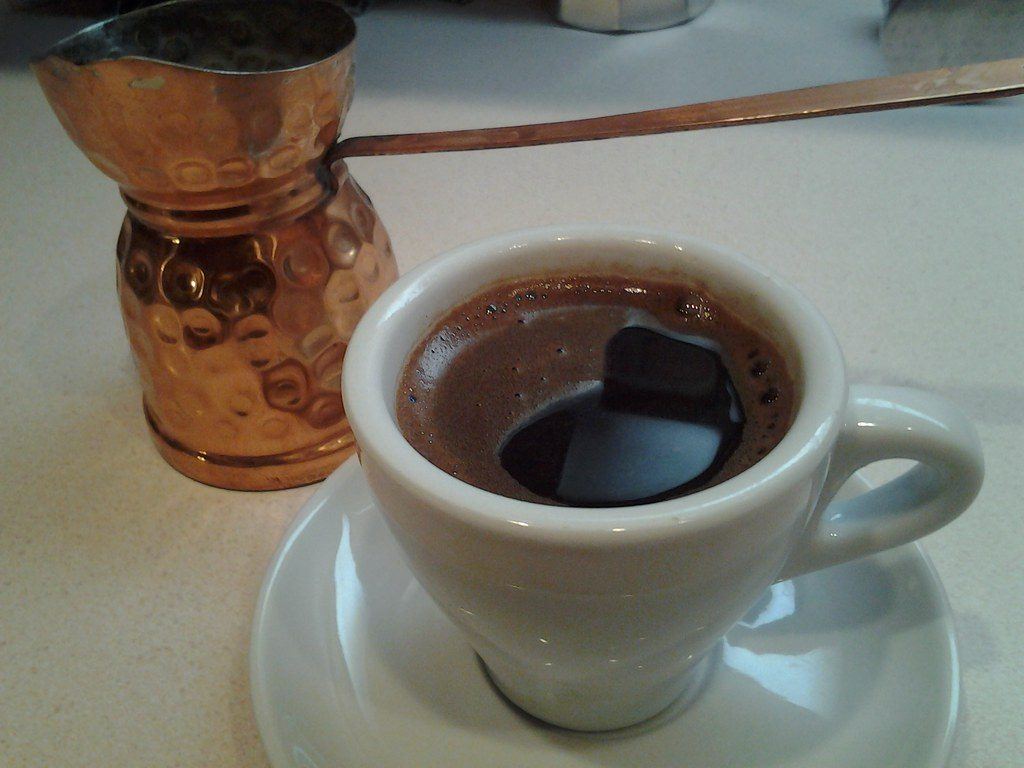
Turkish coffee (Türk kahvesi) is made by heating very finely ground coffee, cold water and sugar, if wanted, together in a small long-handled pot called a cezve. When a dark, creamy foam rises, it is poured straight into a small cup. Nothing is filtered out, so the grounds settle at the bottom and the coffee in the cup has a heavy, velvety body and an intense, slightly bitter taste. The foam (köpük) on top is the sign of a well-made cup.
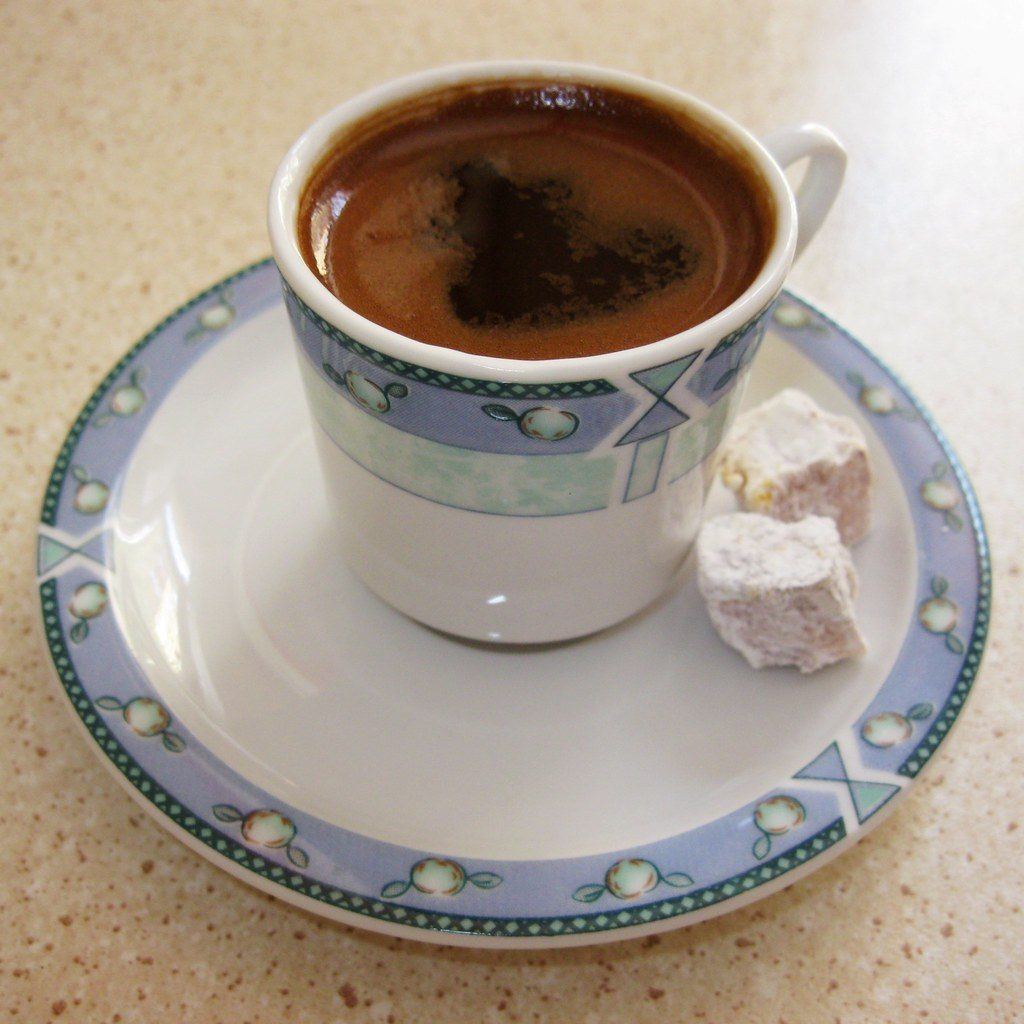
Because the sugar goes into the pot, you say how sweet you want it when you order: sade (no sugar), az şekerli (a little), orta (medium) or şekerli (sweet). It usually comes with a glass of water, to clear your palate first, and often a cube of Turkish delight (lokum). It is sipped slowly, and you stop before the muddy grounds at the bottom.
In Türkiye coffee is about conversation more than caffeine. A popular saying goes, “a cup of coffee is remembered for forty years”. People drink it after meals, with friends at home and in coffeehouses. It also has a part in betrothal visits, and some people turn the empty cup upside down so someone can “read” the grounds for fun. UNESCO added Turkish coffee culture and tradition to its Intangible Cultural Heritage list in 2013.
In the cup
- Köpük (foam) 15%
- Unfiltered coffee 70%
- Settled grounds 15%
Ingredients
- Extra-fine (powder) ground Turkish coffee1 heaped tsp (≈ 6–7 g) per cup
- Cold water1 coffee cup (≈ 70 ml) per serving
- Sugar (optional)0–2 tsp per cup
How to make it
You needCezve (small long-handled pot, traditionally copper), teaspoon, demitasse cups
RatioAbout 1 heaped teaspoon (≈ 6–7 g) coffee per 70 ml cup of water
-
Measure cold water into the cezve using the cup you will serve in, one cup per person.
-
Add one heaped teaspoon of powder-fine coffee per cup, plus sugar if you want it, and stir well before heating.
-
Put the cezve on low heat and don't stir again. Let it warm slowly.
-
When a dark foam starts to rise up the neck, take it off the heat just before it boils over.
-
Spoon some foam into each cup, then return the pot briefly to the heat until it rises again.
-
Pour slowly into the cups so the foam stays on top, and wait a minute for the grounds to settle before serving with water.
Origin & history
Coffee drinking spread from Yemen through the Ottoman world in the 16th century. It was known in Istanbul by the 1530s, and the city’s first coffeehouses are generally dated to around 1554, when two merchants, usually named as Hakem of Aleppo and Shems of Damascus, are said to have opened one in the Tahtakale district. Coffeehouses soon became busy places for conversation, games and news. At times the authorities tried to close them down as hotbeds of gossip and dissent, but they eventually chose to tax them instead.
Brewing coffee well was treated as a skill. Suleiman the Magnificent is said to have had a chief coffee maker, the kahvecibaşı, and later sultans kept the post, and coffee became part of hospitality and of betrothal visits. In one well-known custom, the bride-to-be makes coffee for the groom’s family and sometimes salts the groom’s cup to test his good humour. From the Ottoman world coffee reached Western Europe, probably first through Venice.
In 2013 UNESCO added “Turkish coffee culture and tradition” to the Representative List of the Intangible Cultural Heritage of Humanity. It describes the drink as “a symbol of hospitality, friendship, refinement and entertainment”. World Turkish Coffee Day is now marked every year on 5 December.
Variations
- Greek coffee (ellinikós kafés)almost the same method, renamed in Greece in the second half of the 20th century (Greece)
- Bosnian coffee (bosanska kafa)a little of the boiling water is set aside before the coffee goes in and added back at the end. It is usually served in the džezva so you pour your own (Bosnia and Herzegovina)
- Armenian coffee (soorj)often flavoured with cardamom (Armenia)
- Dibek kahvesibeans crushed in a stone mortar, giving a slightly coarser, softer cup (Türkiye)
- Coffee on sand (kumda kahve)the cezve is heated in hot sand for very gentle, even heat (Türkiye)
Good to know
Decide on sugar when you order. It is cooked in the pot and can't be added later.
Sip the water first to clear your palate, then drink the coffee slowly.
Let the cup rest a minute so the grounds settle, and stop before you reach the sludge at the bottom.
At home, use cold water and low heat, and never let it boil hard. Boiling destroys the foam.
Want the fortune-telling? Turn the empty cup upside down on its saucer and let it cool before someone reads it.