Ethiopian Coffee Ceremony (Buna)
ቡና (buna); the ceremony: ቡና ማፍላት (buna maflat) Say BOO-nah
Ethiopia's coffee ritual: green beans are roasted in a pan, pounded by hand, boiled in a clay jebena and served in small handleless cups over three rounds (abol, tona, baraka), often with incense, popcorn and plenty of talk.
- ServedHot
- In EnglishCoffee ceremony
- TastesBold, Fruity, Rich
About Ethiopian Coffee Ceremony (Buna)
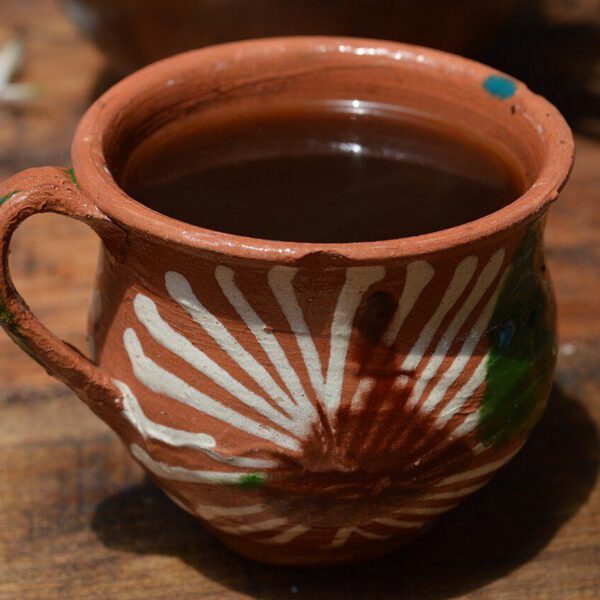
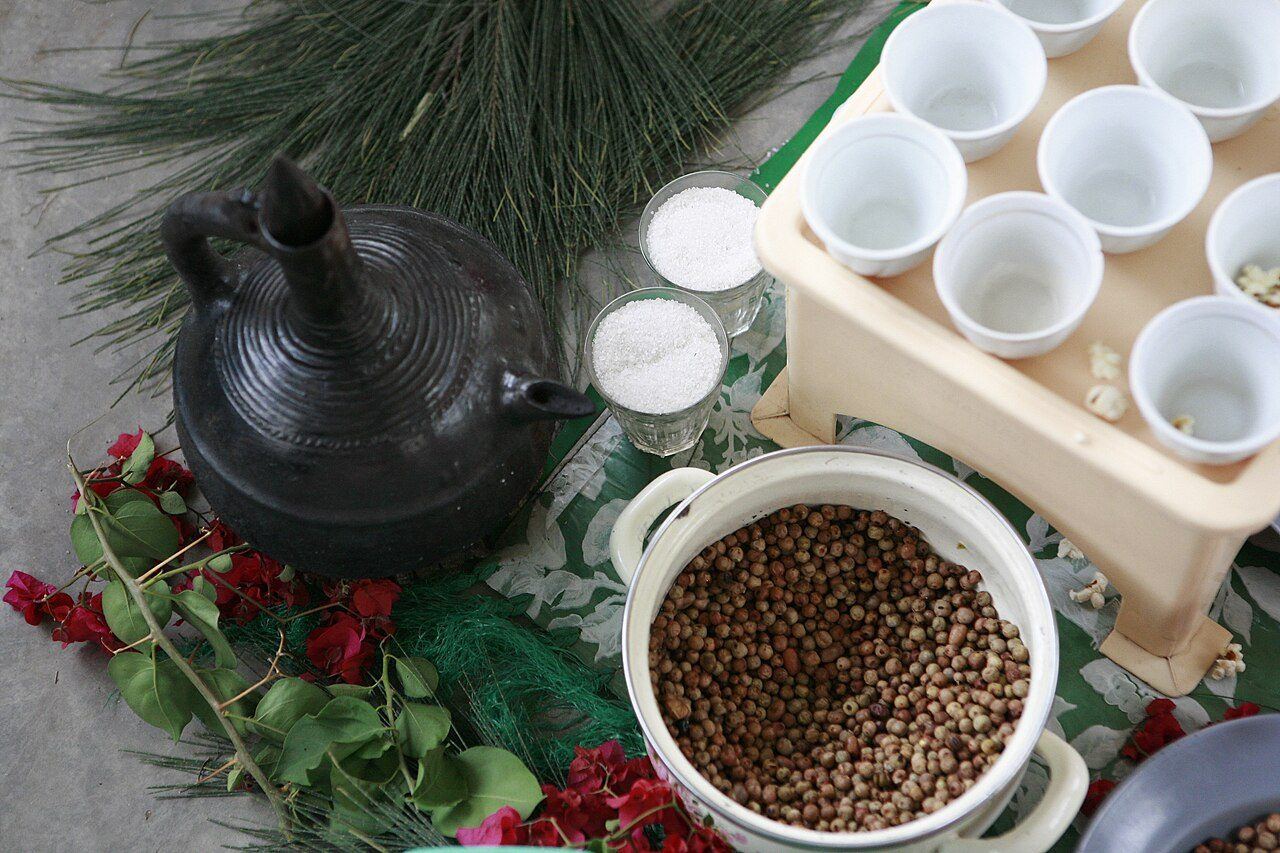
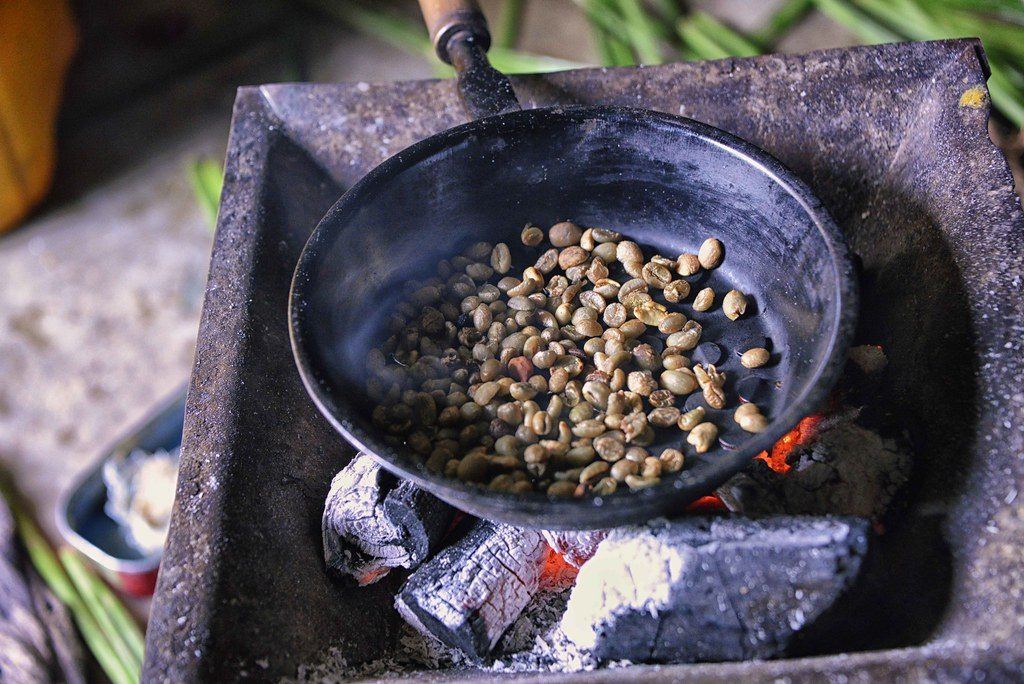
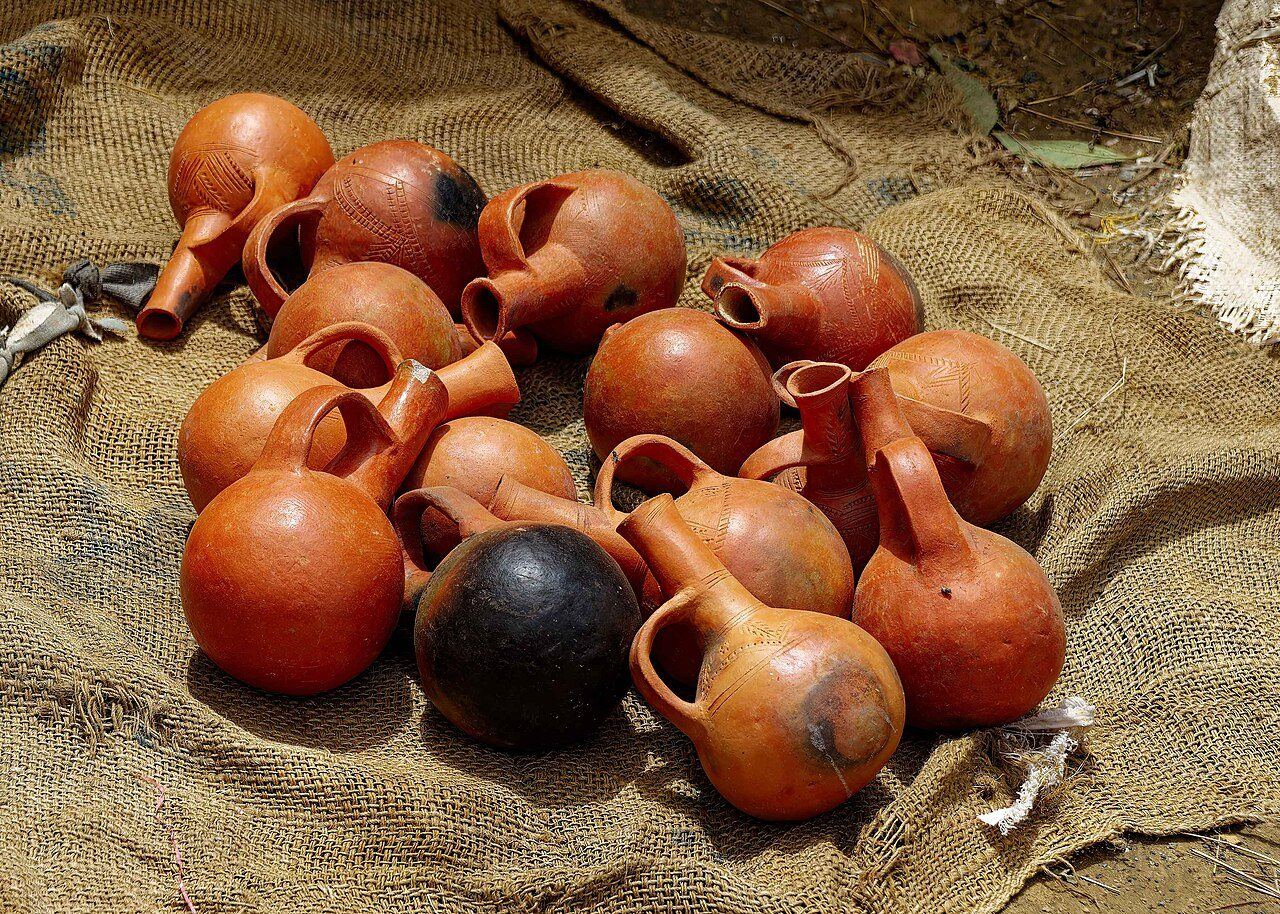
In Ethiopia, the home of the Arabica coffee plant, coffee (buna) is less a drink than an event. In the coffee ceremony the host, traditionally the woman of the house, roasts green beans in a flat pan over a small charcoal stove. When they crackle and smoke she carries the pan round so everyone can breathe in the aroma. The beans are then pounded in a wooden mortar (mukecha) and boiled in a jebena, a round-bellied clay pot with a long neck and spout. Fresh grass is often spread on the floor, and incense smoulders nearby.
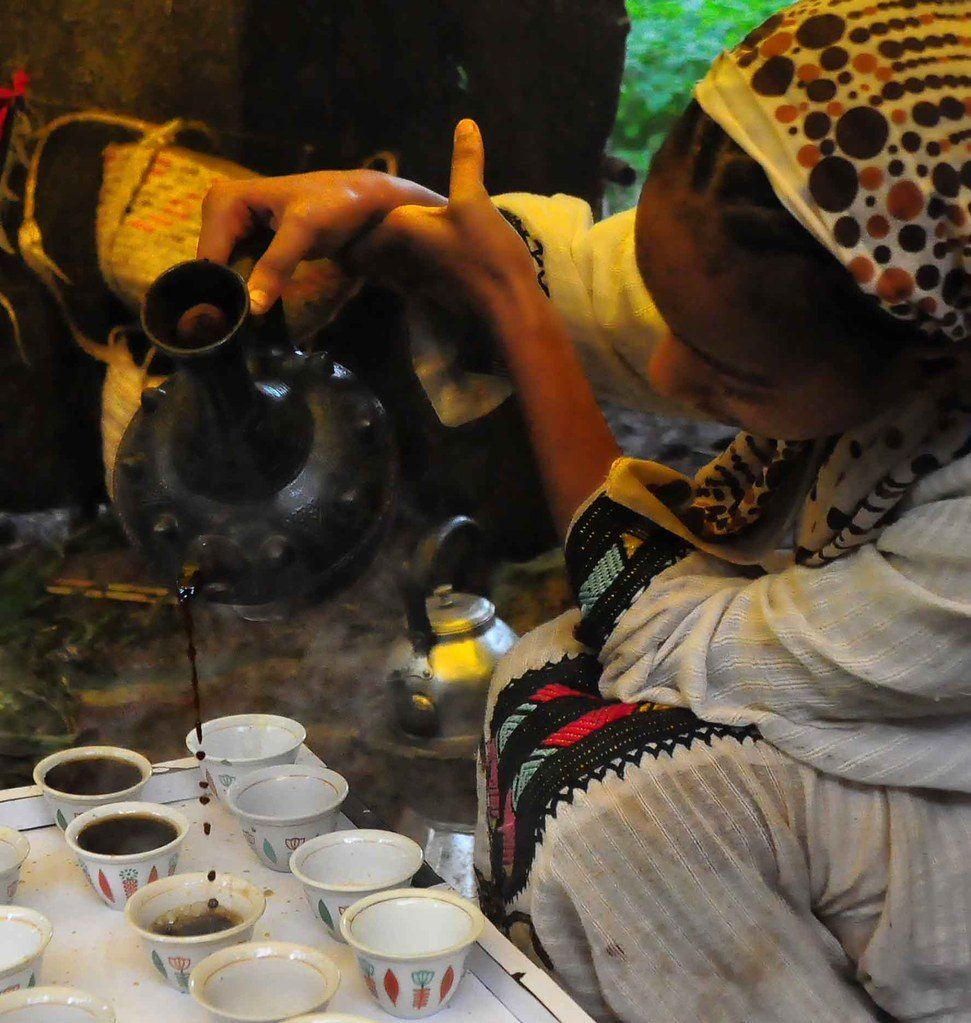
The coffee is poured from a height, in one unbroken stream, into small handleless cups. It is strong, smooth and often fruity or floral, with a smoky edge from the fresh roast. Sugar is common. In the countryside people sometimes add a pinch of salt or a little spiced butter (niter kibbeh), and a sprig of rue (tena adam) may be added for its herbal note. Popcorn, roasted or cooked barley, peanuts or the bread himbasha are passed round as snacks.
The same grounds are brewed three times: abol, the first and strongest cup, tona, the second, and baraka, the third, whose name means “blessing”. A full ceremony can easily take an hour or two, and leaving before the third round is considered impolite. It is how neighbours catch up, guests are welcomed and important occasions are marked, at home and in Ethiopian communities worldwide.
In the cup
- Light foam 10%
- Strong unfiltered coffee 90%
Ingredients
- Green Ethiopian Arabica beans≈ 30–40 g (a small handful) for 4–6 small cups
- Water≈ 500 ml, plus more for the second and third rounds
- Sugar (optional)to taste, in the cup
- Frankincense or other incense (optional, for atmosphere)a few pieces
How to make it
You needFlat roasting pan, small charcoal stove or burner, wooden mortar and pestle (mukecha), jebena clay pot, small handleless cups
RatioVaries by household. The first round (abol) is strongest, and each later round is made by adding water to the same grounds
-
Rinse the green beans, then roast them in a flat pan over medium heat, stirring constantly, until dark and glossy and starting to smoke.
-
Pass the pan round so everyone can enjoy the aroma, then let the beans cool briefly.
-
Pound the beans in a mortar (or grind them) to a medium-fine powder.
-
Bring the water to the boil in a jebena or small pot, add the coffee and let it come back to the boil 2–3 times.
-
Take it off the heat and let it rest for a few minutes so the grounds settle (in a jebena, plug the spout with a little filter of fibre).
-
Pour from a height in one smooth stream into the cups without stopping. This is the first round, abol.
-
Add more water to the same grounds and repeat for the second (tona) and third (baraka) rounds.
Origin & history
The Arabica coffee plant (Coffea arabica) grows wild in the highland forests of southern and south-western Ethiopia, and Ethiopia is widely regarded as coffee’s birthplace. The most famous origin story tells of a goatherd, later named Kaldi, whose goats became lively after nibbling coffee berries. The legend, though, was first written down only in 1671, by Antoine Faustus Nairon in Rome. The name “Kaldi” was popularised later still, and historians consider the story apocryphal.
What is clearer is that coffee crossed the Red Sea to Yemen, where Sufis were drinking it by the 15th century, and from there it spread across the Islamic world and on to Europe. In Ethiopia itself, coffee drinking long had Muslim associations, and many Ethiopian Christians avoided it until the 19th century. Today it is woven into everyday life for everyone.
Ethiopia is now Africa’s largest coffee producer and among the world’s top five. Unusually for a producing country, roughly half of its harvest is drunk at home. Much of it goes through the slow, sociable coffee ceremony, which is still performed daily in many households and at weddings, holidays and gatherings.
Variations
- Eritrean coffee ceremonythe same ritual; in Tigrinya the rounds are awel, kale’i and baraka (Eritrea)
- Buna with salt or niter kibbeha pinch of salt or spiced butter in the cup (rural Ethiopia)
- Buna with rue (tena adam)a sprig of rue added to the cup for an herbal note (Ethiopia)
- Jebena bunaceremony-style coffee sold from a clay pot at street stalls and cafés (Ethiopia and the diaspora)
Good to know
If you're invited, plan to stay. Leaving before the third round (baraka, the "blessing") can seem rude.
When the pan of freshly roasted beans is brought to you, waft the smoke towards you and say how good it smells. That's part of the ritual.
Try the coffee with sugar first, the way most locals take it. Salt or butter is mostly a rural custom.
Look for jebena buna stalls and cafés in Ethiopian towns. They are an easy way to try the ceremony coffee as a traveller.
At home without a jebena, a small saucepan and a fine strainer will get you surprisingly close.