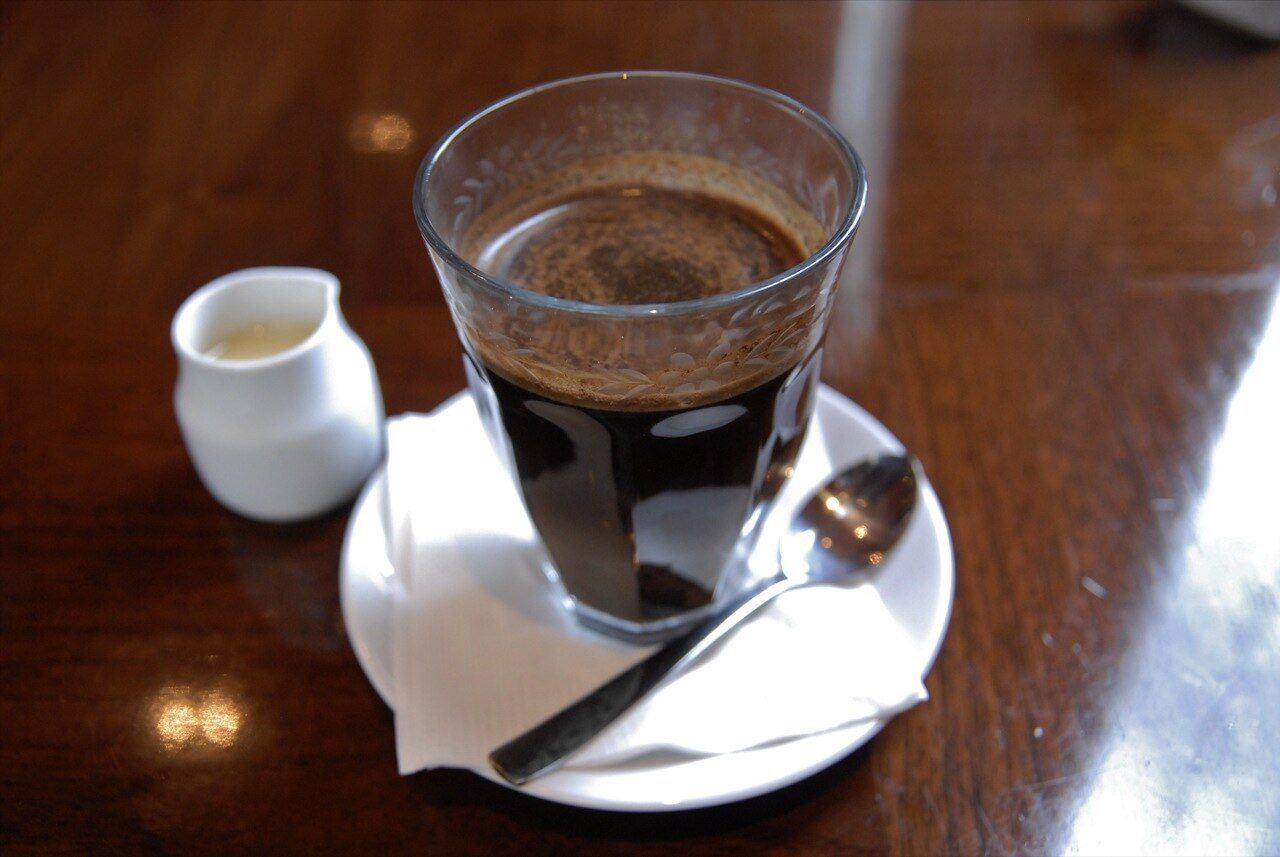
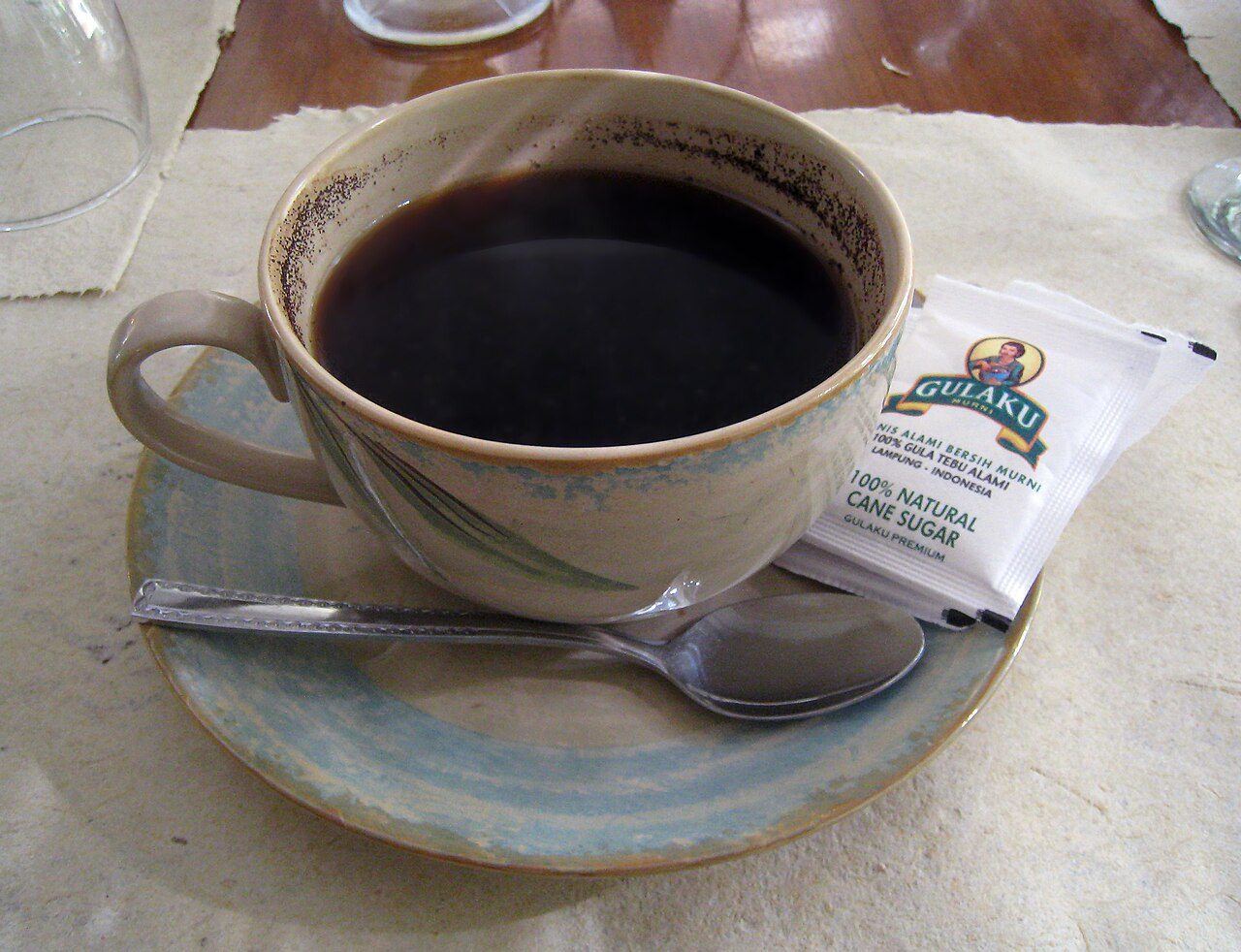
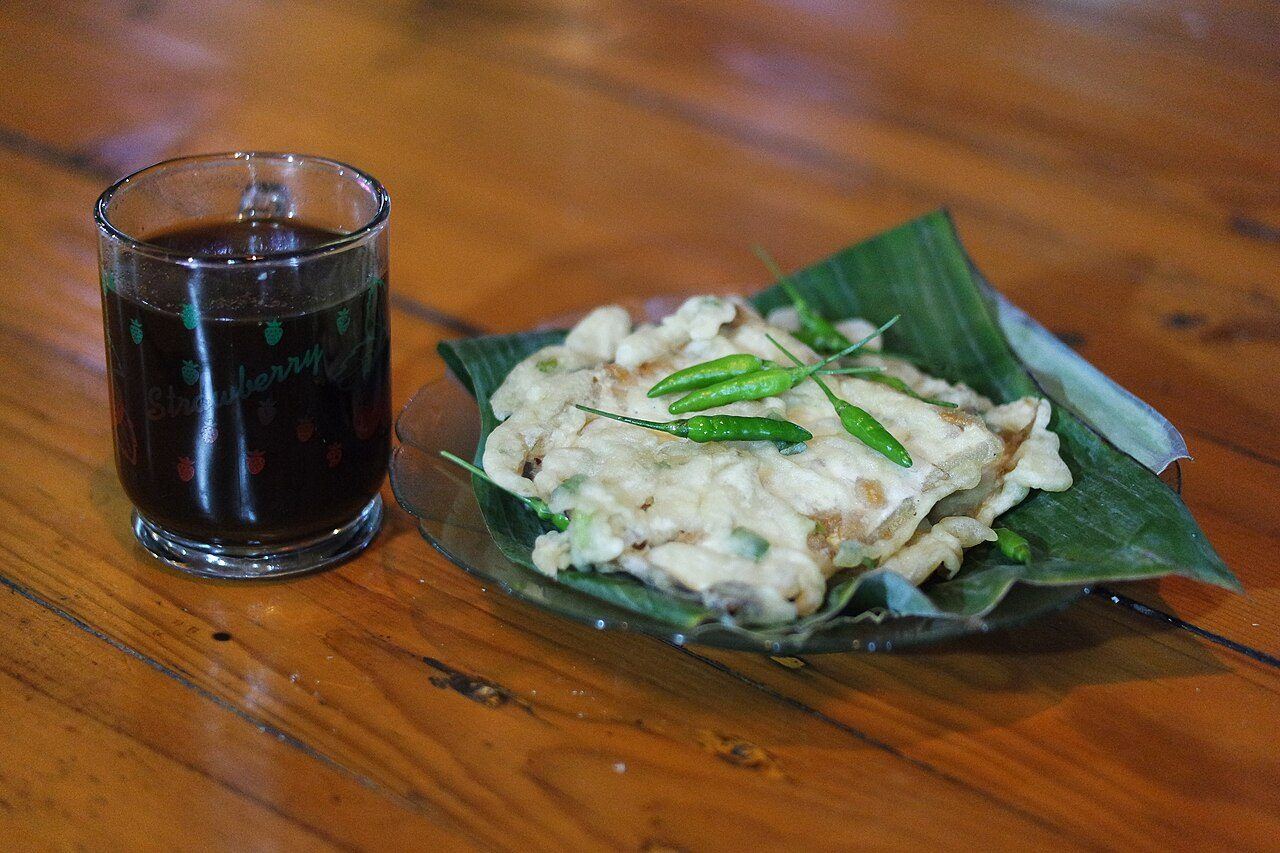
The simplest Indonesian coffee: ground coffee and sugar in a glass, topped with boiling water and left until the grounds sink. Thick, strong and sweet, it is served in warungs across Java and Bali.
ServedHot
In English“Collision” coffee
TastesBitter, Bold, Sweet
About Kopi Tubruk
Kopi tubruk is Indonesia’s no-fuss everyday coffee. A couple of spoonfuls of ground coffee – and usually sugar – go straight into a glass or mug, boiling water is poured on top, and that is it: no filter, no machine. You wait a few minutes for the grounds to sink, then sip carefully, leaving the sludge at the bottom.
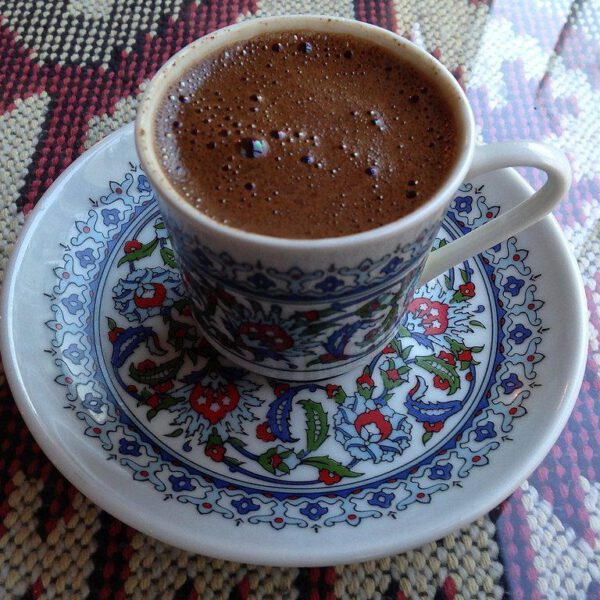
The result is strong, full-bodied and often quite sweet, with the slightly gritty texture that earned it the nickname “mud coffee”. It is close in spirit to Turkish or Greek coffee, but the coffee is steeped in the glass rather than boiled in a pot. Most people use everyday local ground coffee bought at the corner warung, and in Bali the drink is simply called kopi selem, “black coffee”.
It is at its best taken slowly: on a front porch with friends during an afternoon rain, or at a roadside warung with a plate of fried snacks. Ask for condensed milk and it becomes kopi susu.
what’s inside
In the cup
Black coffee90%
Settled grounds10%
Ingredients
Finely ground coffee2 heaped tsp
Sugar1 tsp, or to taste
Water, just off the boil150–200 ml
make it at home
How to make it
You needHeatproof glass or mug, kettle, spoon
RatioAbout 2 tsp ground coffee per cup, plus about 1 tsp sugar (more to taste)
01
Put the ground coffee and sugar into a heatproof glass or mug.
02
Pour in water straight off the boil.
03
Stir once or twice to wet all the grounds.
04
Leave it for a few minutes until most of the grounds have sunk to the bottom.
05
Sip slowly and stop before you reach the sludge.
the story
Origin & history
Coffee reached Indonesia through the Dutch: in 1696 the Dutch governor in Malabar, India, sent Arabica seedlings to Batavia (now Jakarta). That first batch was lost to flooding, a second arrived in 1699, and Java began exporting coffee to Europe in 1711. When leaf rust wiped out much of the Arabica in the late 19th century, Robusta was brought in from 1900, and it still makes up most of Indonesia’s harvest today. Indonesia was the world’s fourth-largest coffee producer in 2025.
The tubruk method itself is usually said to have come with Middle Eastern traders, which would explain its resemblance to Turkish coffee. “Tubruk” is a Javanese word meaning collision, and the name covers both the drink and the way it is made.
It remains especially popular in Yogyakarta and Central Java, where almost every warung serves it. In villages it was traditionally seen as a men’s drink, though that has long been changing.
same idea, different cup
Variations
Kopi susukopi tubruk with sweetened condensed milk (Indonesia)
Kopi jossblack coffee with a glowing piece of charcoal dropped in, from the angkringan stalls near Tugu Station (Yogyakarta)
Kopi selemthe Balinese name for the same black, unfiltered coffee (Bali)
Kopi alpukatan unusual mix of coffee and avocado juice (Indonesia)
like a local
Good to know
Wait until the grounds have sunk before you drink – a few minutes is usually enough.
Don't drink the last centimetre: the thick, bitter sludge is meant to be left behind.
Use water straight off the boil; if it is not hot enough the grounds stay floating on top.
It usually comes sweetened – say “tanpa gula” if you want it without sugar.