Arabic Coffee (Qahwa)
قهوة عربية (qahwa ʿarabiyya); Gulf: gahwa Say KAH-wah (Gulf: GAH-wah)
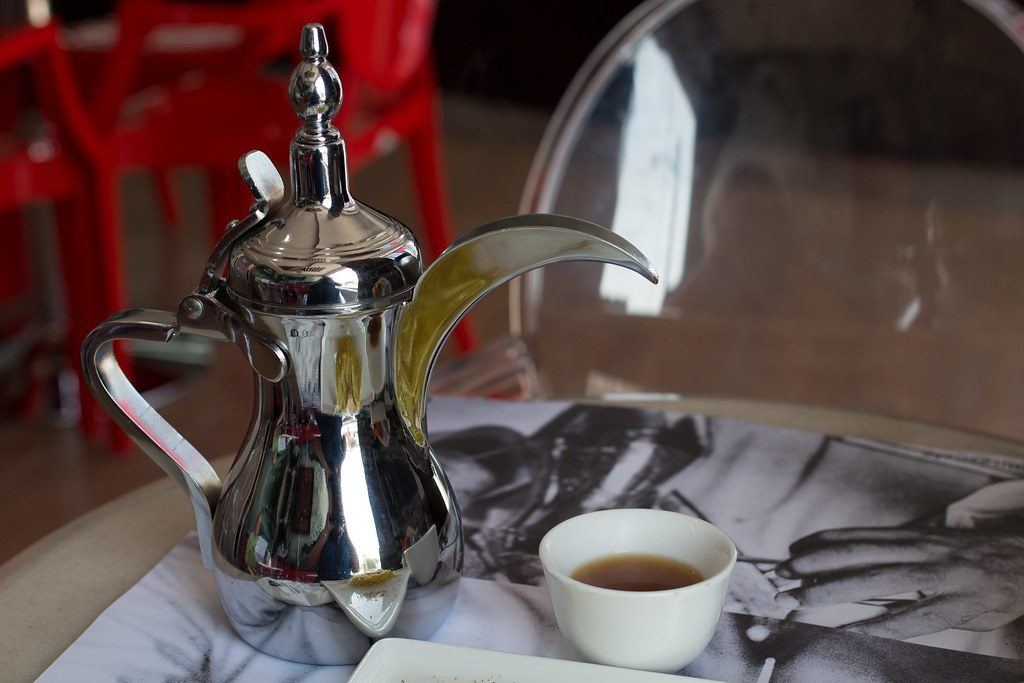
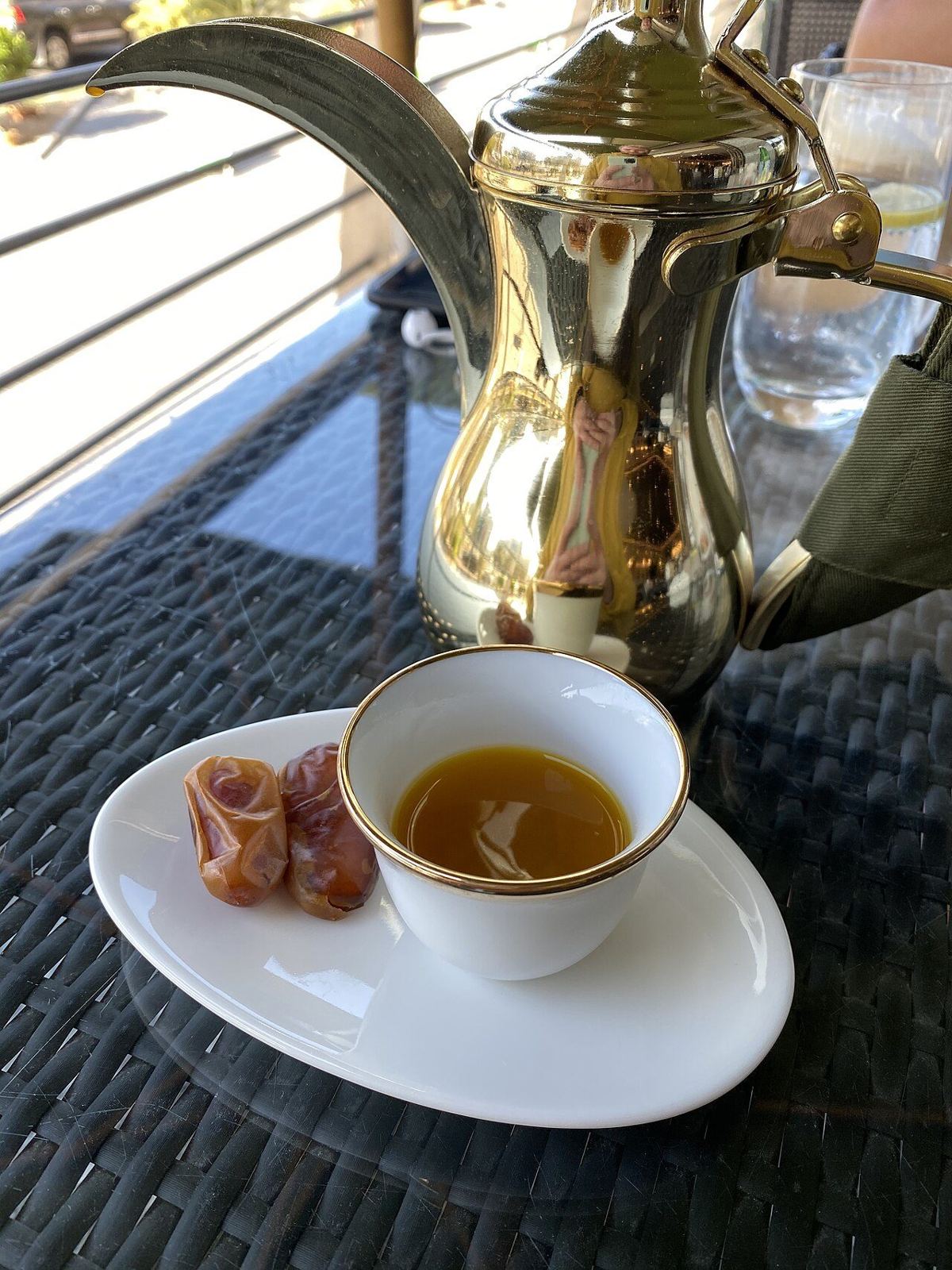
The welcome coffee of the Arabian Peninsula. Lightly roasted beans are simmered with cardamom (and often saffron or cloves), poured from a dallah into small finjan cups and served with dates. UNESCO-listed in 2015.
- ServedHot
- In EnglishArabic coffee
- TastesBitter, Bright, Spiced
About Arabic Coffee (Qahwa)
Arabic coffee, qahwa (or gahwa in the Gulf), tastes nothing like a dark espresso. In Saudi Arabia and the Gulf the beans are usually roasted only lightly, so the drink is golden to light brown. It is simmered with plenty of crushed cardamom and, depending on the family and region, saffron, cloves or other spices. The result is thin-bodied, fragrant, herbal and gently bitter. Sugar is not normally added, because the sweetness comes from the dates served beside it.
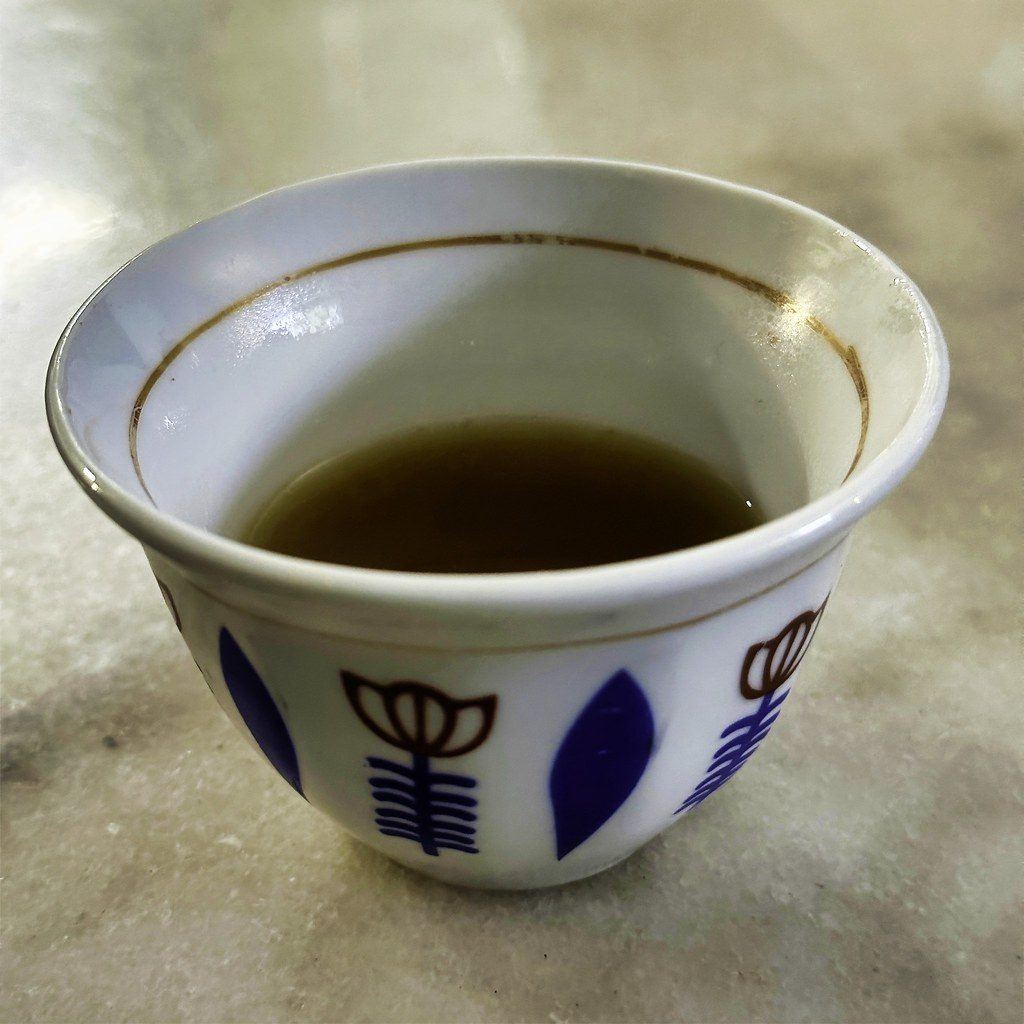
Serving it is part of the experience. The coffee is poured from a dallah, a pot with a long curved spout, into tiny handleless cups called finjan, each filled only about a quarter full. The oldest or most important guest is served first. You take and return the cup with your right hand. Your host will keep refilling it until you gently shake the empty cup from side to side to show you have had enough. Many people stop at one to three cups.
Qahwa is poured at home, in offices, at weddings and in the majlis (the sitting room where guests are received), and it is a standard offering to visitors. UNESCO inscribed “Arabic coffee, a symbol of generosity” on its Intangible Cultural Heritage list in 2015, nominated jointly by the UAE, Saudi Arabia, Oman and Qatar. Jordan joined the listing in 2024.
In the cup
- Cardamom-spiced light-roast coffee 100%
Ingredients
- Lightly roasted Arabica, ground2–3 tbsp
- Water500 ml
- Green cardamom pods, crushed1–2 tbsp (to taste)
- Saffron threads (optional)a pinch
- Whole cloves (optional)2–3
How to make it
You needDallah or small saucepan, vacuum flask (often used for serving today), finjan cups
RatioVaries by household and region; cardamom is used generously
-
Bring the water to the boil in a dallah or small pot.
-
Add the ground coffee, lower the heat and let it simmer gently for 10–15 minutes without boiling hard.
-
Add the crushed cardamom (plus saffron or cloves if using) and simmer for another 2–3 minutes.
-
Take the pot off the heat and let it stand for a few minutes so the grounds settle.
-
Pour carefully into a serving dallah or flask, leaving the grounds behind (some people strain it through a palm-fibre or cloth filter in the spout).
-
Serve in small cups filled about a quarter full, with dates on the side.
Origin & history
Coffee drinking as we know it began across the Red Sea from Ethiopia, in Yemen. The earliest credible evidence dates to the mid-15th century, when Sufis drank it to stay awake during night-time devotions, and the port of Mokha gave its name to the trade. From Yemen it spread to Mecca, Cairo and the rest of the Arab and Ottoman world. There was resistance along the way. Coffee was banned in Mecca in 1511, but the ban was overturned in 1524.
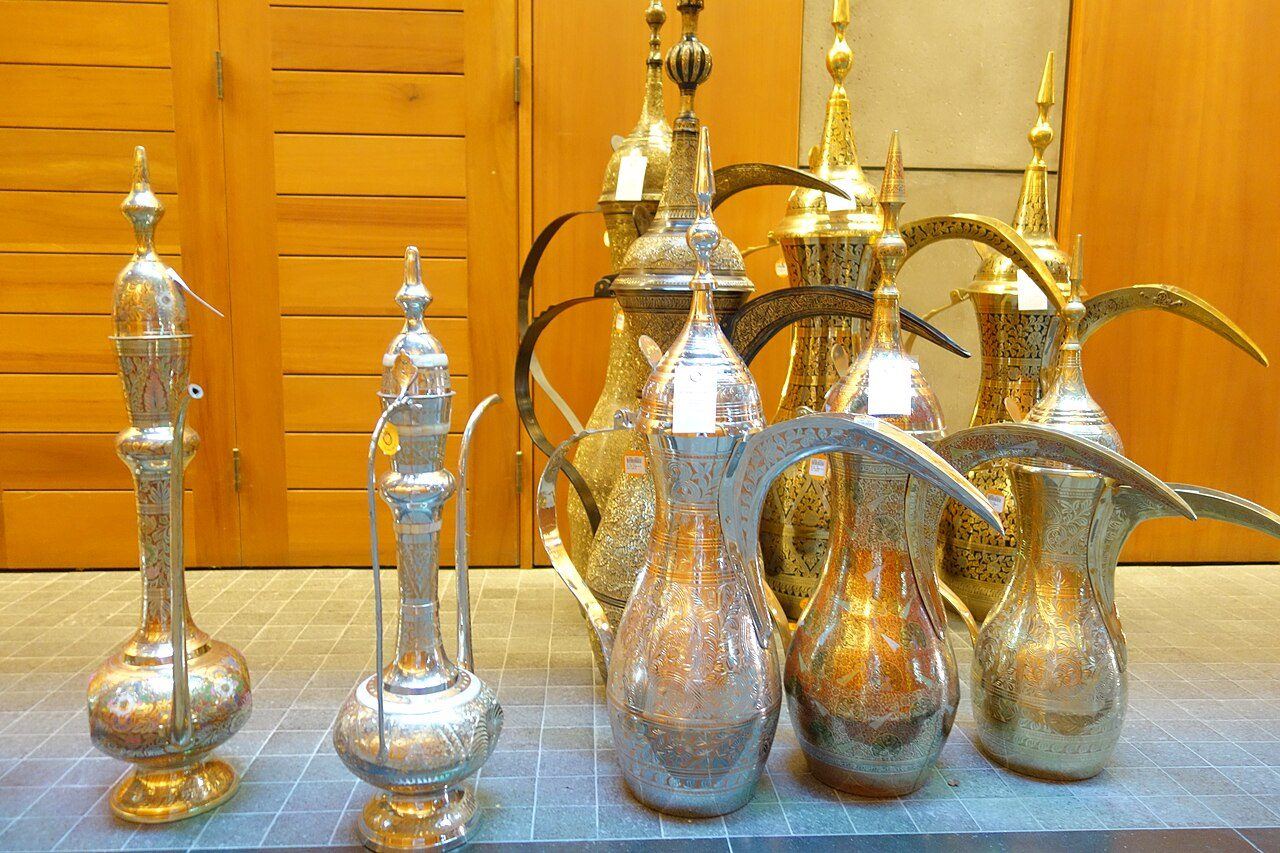
In the Arabian Peninsula coffee became a pillar of Bedouin hospitality. Beans were roasted in a shallow pan over the fire, pounded, and brewed in a set of dallahs. In the Emirati tradition there is a large pot for boiling, a medium one for filtering and a small one for serving. Pouring coffee for guests became a mark of generosity, with set rules about who is served first and how cups are offered and returned.
In 2015 UNESCO added “Arabic coffee, a symbol of generosity” to the Representative List of the Intangible Cultural Heritage of Humanity, following a joint nomination by the United Arab Emirates, Saudi Arabia, Oman and Qatar. Jordan joined the listing in 2024. Saudi Arabia now actively promotes “Saudi coffee”, including through a Ministry of Culture coffee festival in Riyadh.
Variations
- Saudi (Najdi/Hejazi) gahwavery light, golden roast with lots of cardamom, often saffron (Saudi Arabia)
- Gulf gahwalight roast, saffron gives a yellow colour (UAE, Qatar, Oman, Kuwait, Bahrain)
- Qahwa sada / murradarker, very bitter Bedouin-style coffee, sometimes brewed for hours (Jordan, Levant, northern Arabia)
- Levantine cardamom coffeedarker roast and finer grind, closer to Turkish coffee (Lebanon, Syria, Palestine)
- Yemeni coffee with hawaijcoffee spiced with a local spice blend (Yemen)
Good to know
Accept and hand back the finjan with your right hand.
To say "no more, thank you", gently shake the empty cup from side to side before handing it back. Otherwise it will be refilled.
It is polite to accept at least one cup. One to three is usual.
Eat a date between sips. The sweetness balances the bitter, spicy coffee.
Expect a pale, golden drink. Light roasts and saffron are normal, not a weak brew.