Pour-over
Pour-over / hand drip (Japan: ハンドドリップ, hando dorippu) Say POR-oh-ver
Filter coffee made by hand: hot water is poured in slow, controlled stages over medium-ground coffee in a paper-lined dripper such as a V60, Chemex or Melitta cone. It gives a clean, light-bodied cup that shows off the bean’s origin flavours.
- ServedHot & Iced
- In EnglishHand-brewed filter coffee
- TastesBalanced, Bright, Fruity
About Pour-over
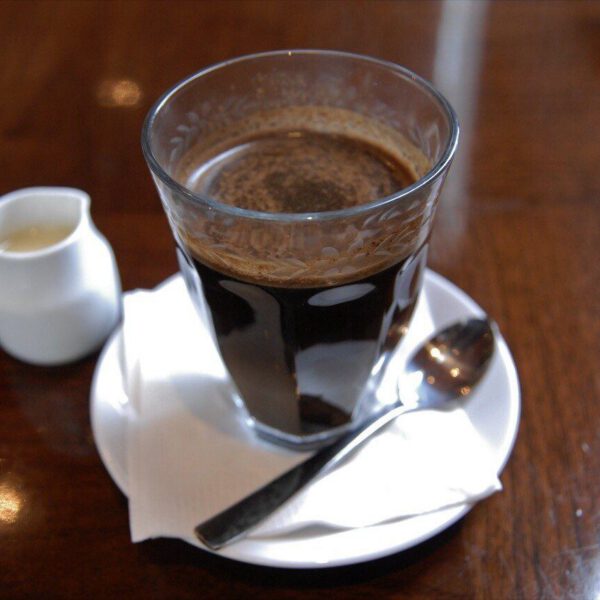
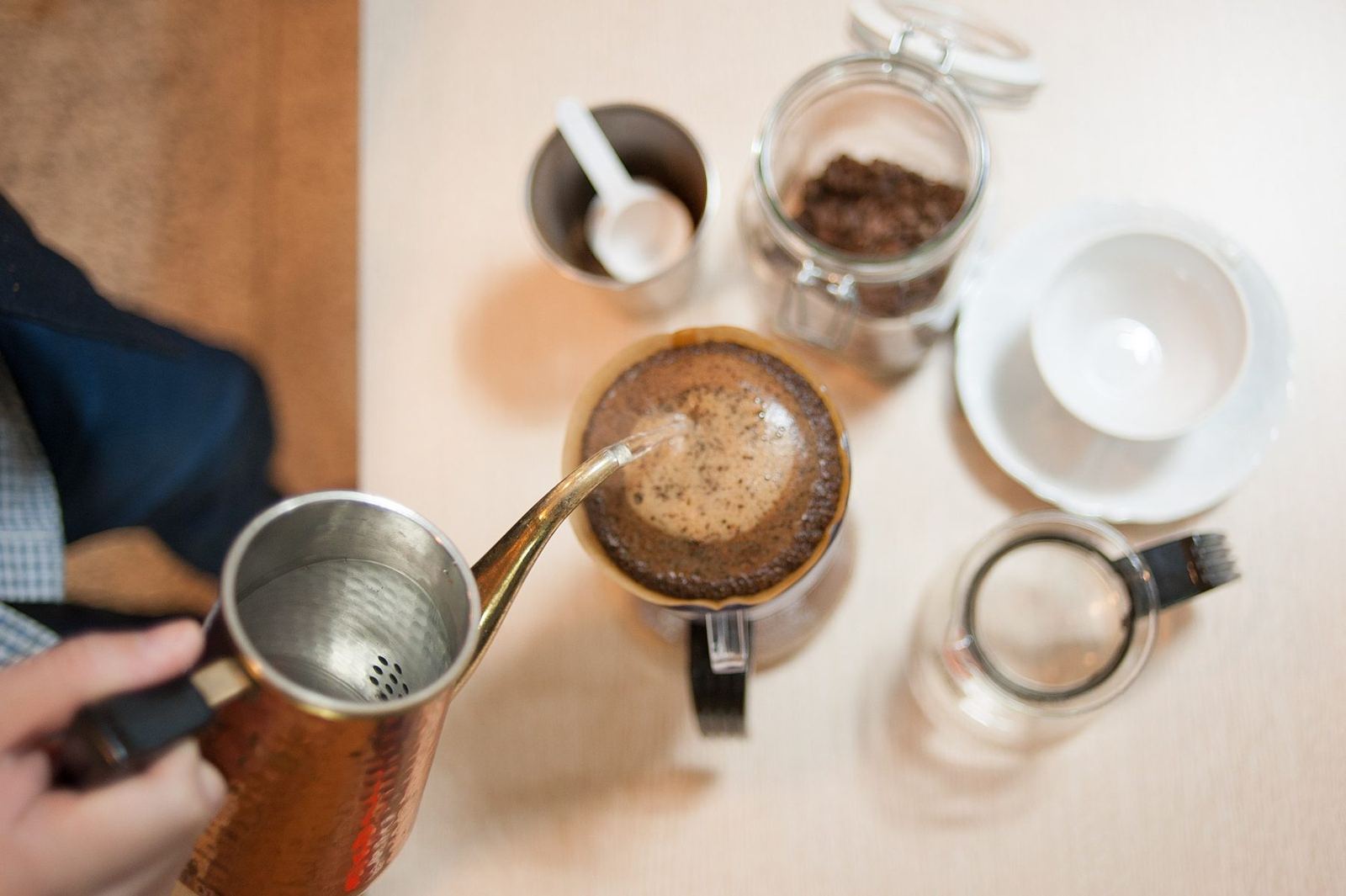
Pour-over is filter coffee made by hand, one cup (or one jug) at a time. Ground coffee sits in a paper filter inside a cone or flask, and the barista pours hot water over it in slow circles, usually from a gooseneck kettle. Gravity draws the coffee through the bed and filter into the cup below. Because the paper traps most oils and fine particles, the result is clean and clear, with a lighter body than espresso or French press and plenty of aroma.
That clarity is why specialty cafés love it. A light-roasted Ethiopian might taste of jasmine and lemon, a Kenyan of blackcurrant, a Colombian of caramel and red apple. Cafés often list pour-over beans on a separate “filter” or “slow bar” menu and brew each cup to order, which takes a few minutes – part of the ritual. In Japan, hand-drip coffee is a craft in its own right, from old kissaten coffee houses to modern third-wave bars.
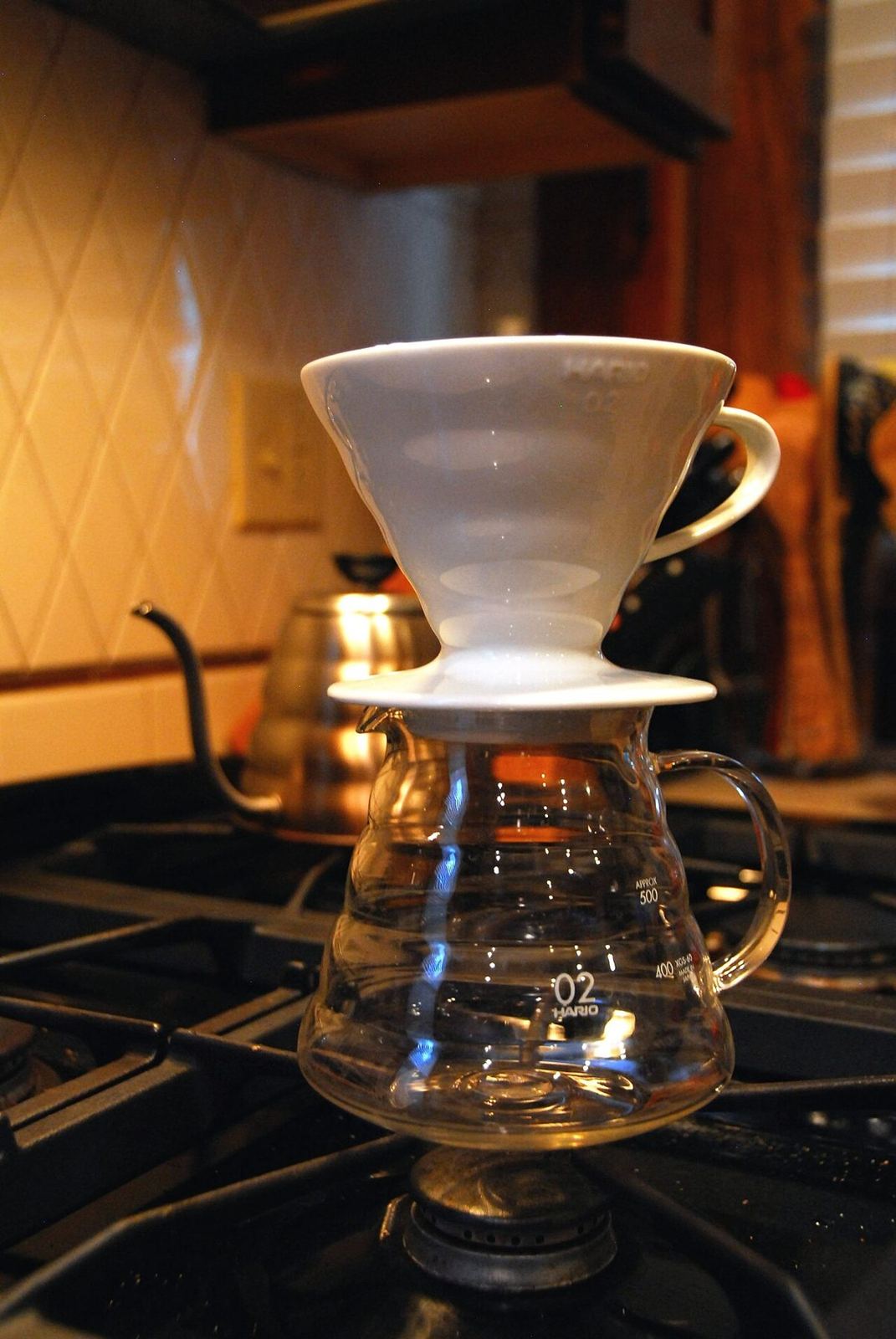
The brewer you’ll see most often is the cone-shaped Hario V60, followed by the hourglass-shaped glass Chemex, flat-bottomed drippers such as the Kalita Wave, and the classic Melitta cone. For travellers it’s a great way to sample local roasters: ask what beans are on filter today and drink it black first.
In the cup
- Filter coffee 100%
Ingredients
- Freshly roasted coffee, ground medium (like sea salt)15 g
- Filtered water just off the boil (≈ 92–96 °C)250 ml, plus extra for rinsing
- Paper filter1
How to make it
You needDripper (Hario V60, Chemex, Kalita Wave or Melitta cone), paper filter, gooseneck kettle, scale, grinder, cup or server
RatioAbout 60 g coffee per litre of water (roughly 1 : 16), e.g. 15 g coffee to 250 ml water
-
Heat water to about 92–96 °C (just off the boil).
-
Place the paper filter in the dripper, rinse it with hot water and discard the rinse water.
-
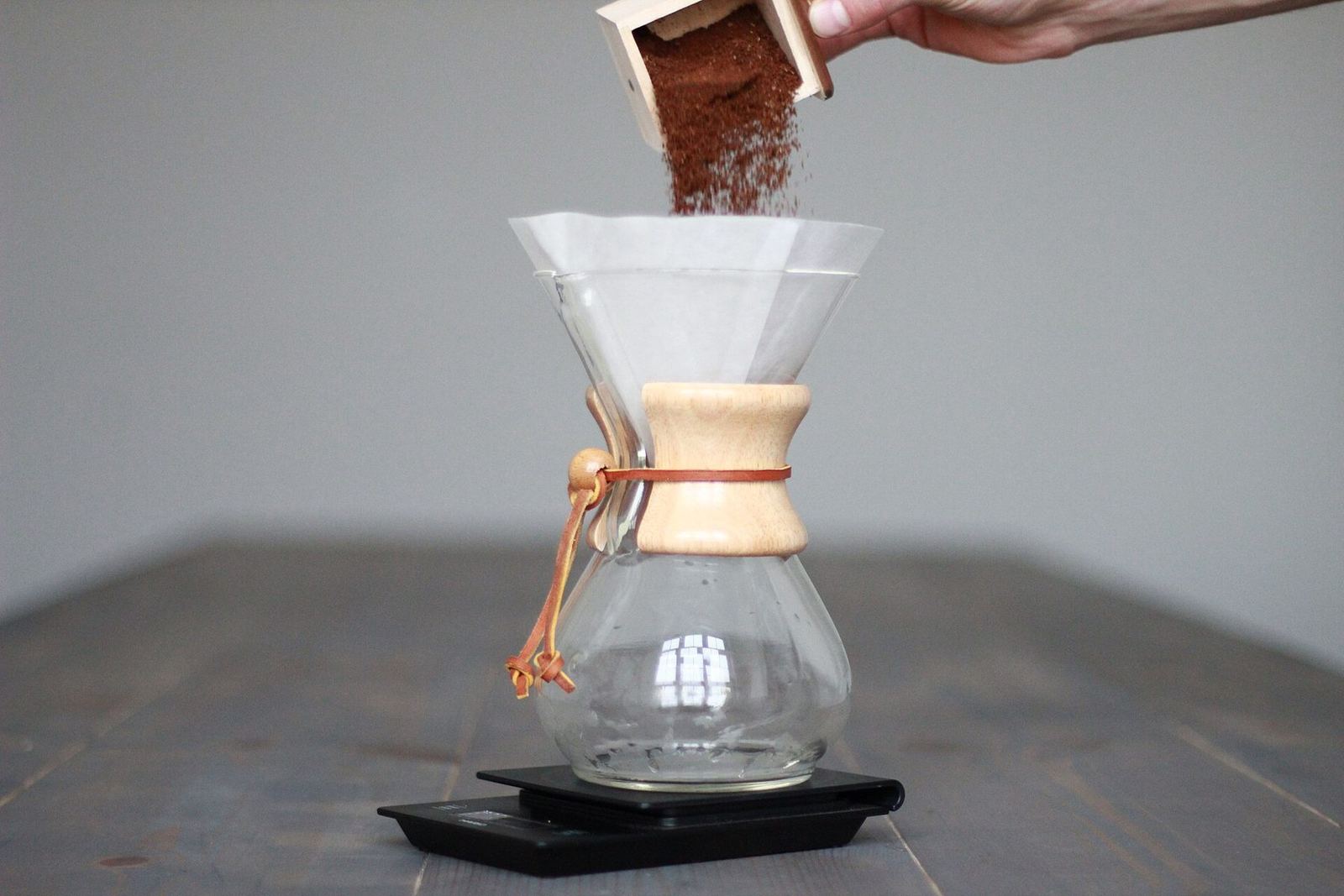
Add 15 g of medium-ground coffee and gently level the bed.
-
Pour about 30–40 ml of water to wet all the grounds and let it ‘bloom’ for 30–45 seconds.
-
Pour the rest of the water slowly in small circles, in two or three stages, avoiding the paper edges.
-
Let it drain completely – about 2½–4 minutes in total – then swirl and serve.
Origin & history
People have strained coffee through cloth for centuries, but the paper-filter pour-over began in Dresden, Germany. Housewife Melitta Bentz, tired of bitter, gritty coffee, punched holes in a brass pot and lined it with blotting paper torn from her son’s notebook. In June 1908 she was granted a patent by the Imperial Patent Office in Berlin, and that same year she and her husband Hugo founded the company that still bears her name. Melitta’s cone filters and papers went on to become a household standard.
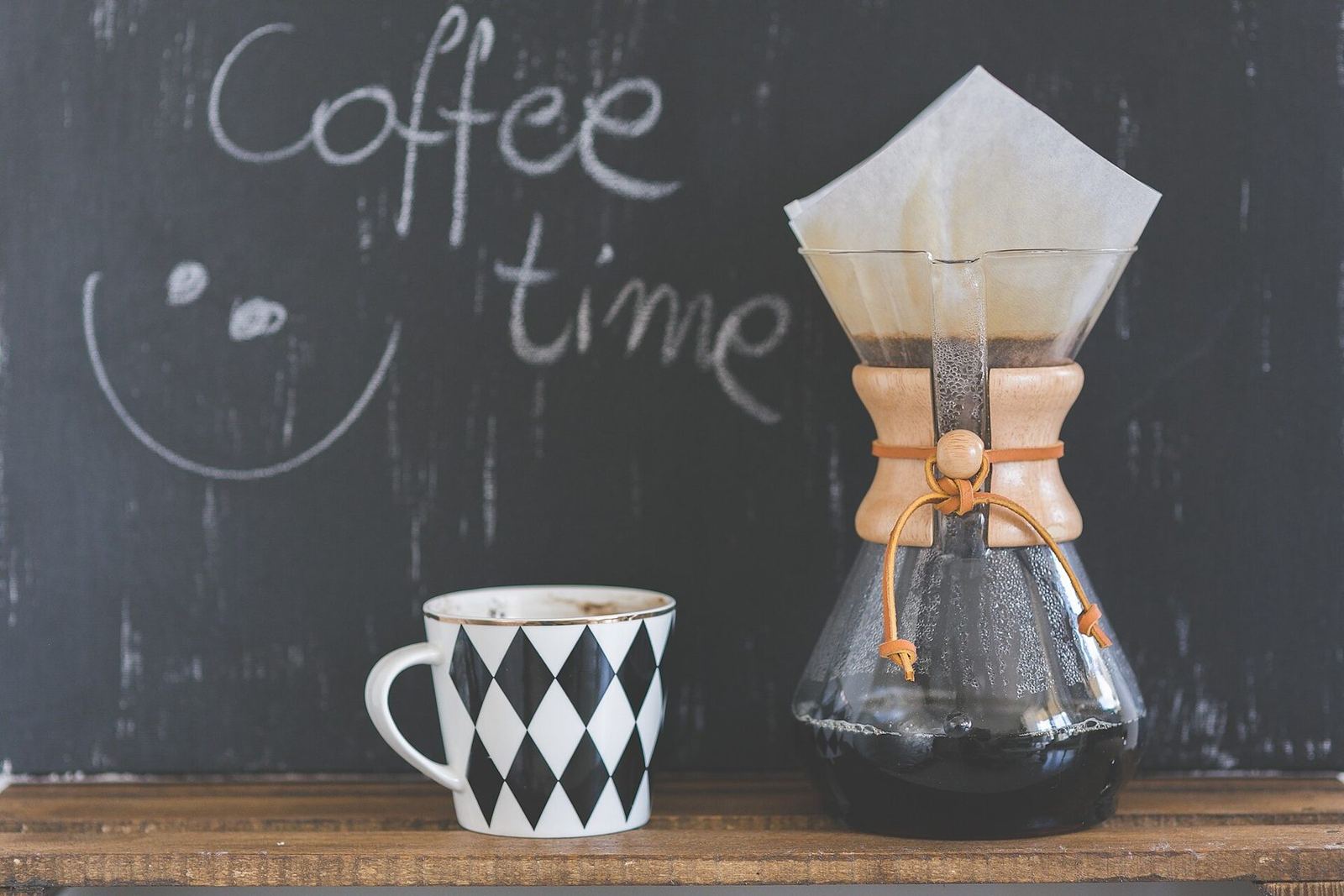
In 1941 the German-born chemist Peter Schlumbohm, then living in the United States, designed the Chemex: an hourglass flask inspired by laboratory glassware, with a wooden collar and a thick paper filter. Its design was later included in the collection of the Museum of Modern Art in New York.
Japan developed its own rich hand-drip culture through the 20th century, and in 2004 the glassware maker Hario launched the V60, named after the 60-degree angle of its cone. The V60 spread around the world after it was used at the 2010 World Brewers Cup in London, becoming an emblem of the “third wave” of specialty coffee, in which pour-over is used to highlight the character of single-origin beans.
Variations
- Hario V60cone with spiral ribs and a large single hole; quick, bright cups (Japan)
- Chemexhourglass glass flask with thick bonded filters; very clean, tea-like coffee (USA)
- Kalita Waveflat-bottomed dripper with wavy filters for an even extraction (Japan)
- Melitta conethe original paper-filter dripper, still found in homes everywhere (Germany)
- Nel dripflannel-cloth filter used in traditional Japanese kissaten (Japan)
- Japanese iced coffeepour-over brewed straight onto ice to lock in aroma (Japan)
Good to know
Pour-overs are brewed to order, so expect to wait three to five minutes – it’s worth it.
Ask the barista about the beans; most cafés offer two or three origins with tasting notes.
Taste it black and let it cool a little: fruity and floral notes come through more as the cup drops in temperature.
At home, rinse the paper filter with hot water first to remove papery taste and warm the brewer.
If your cup tastes sour, grind a little finer; if it tastes bitter or harsh, grind coarser.