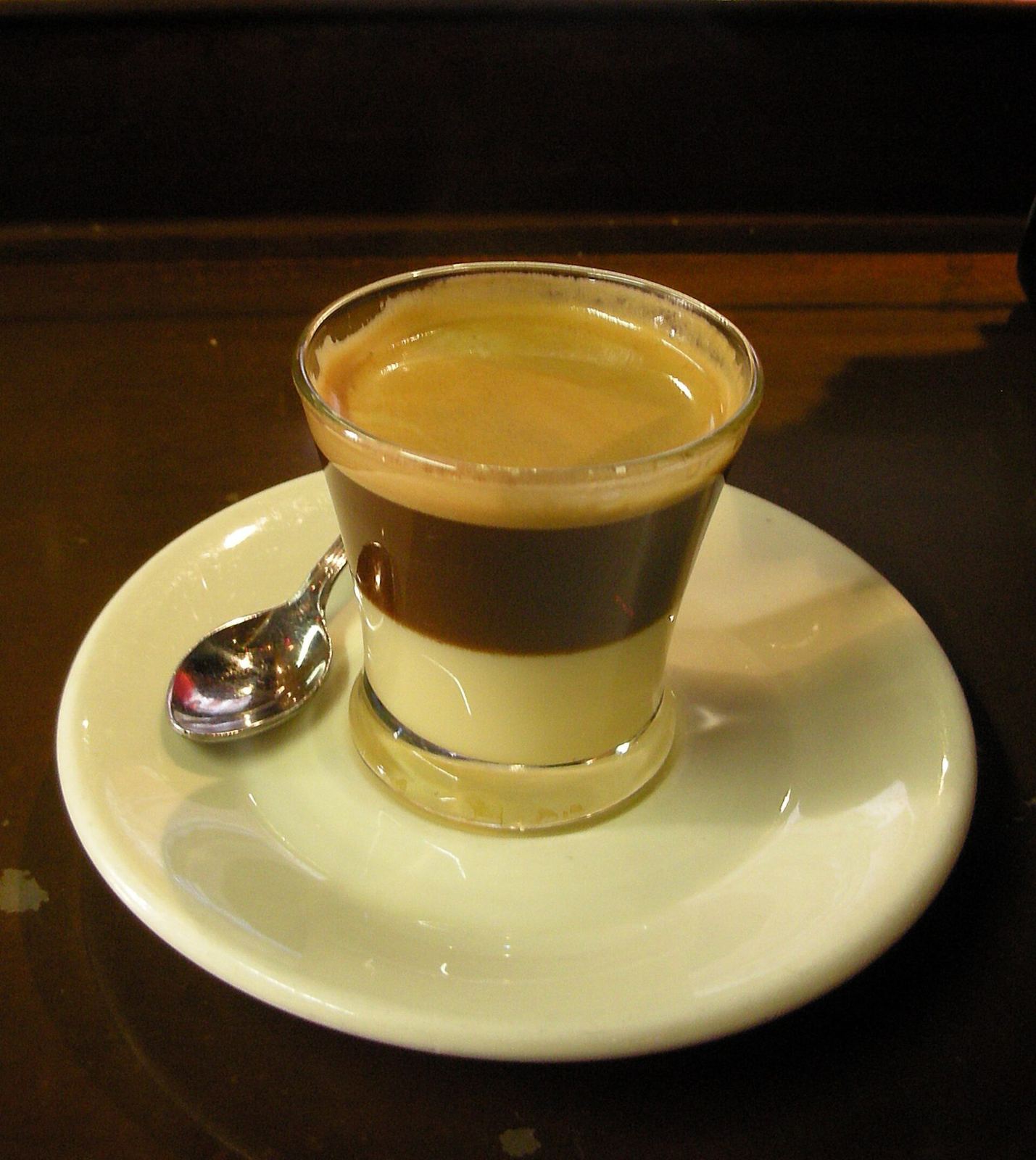
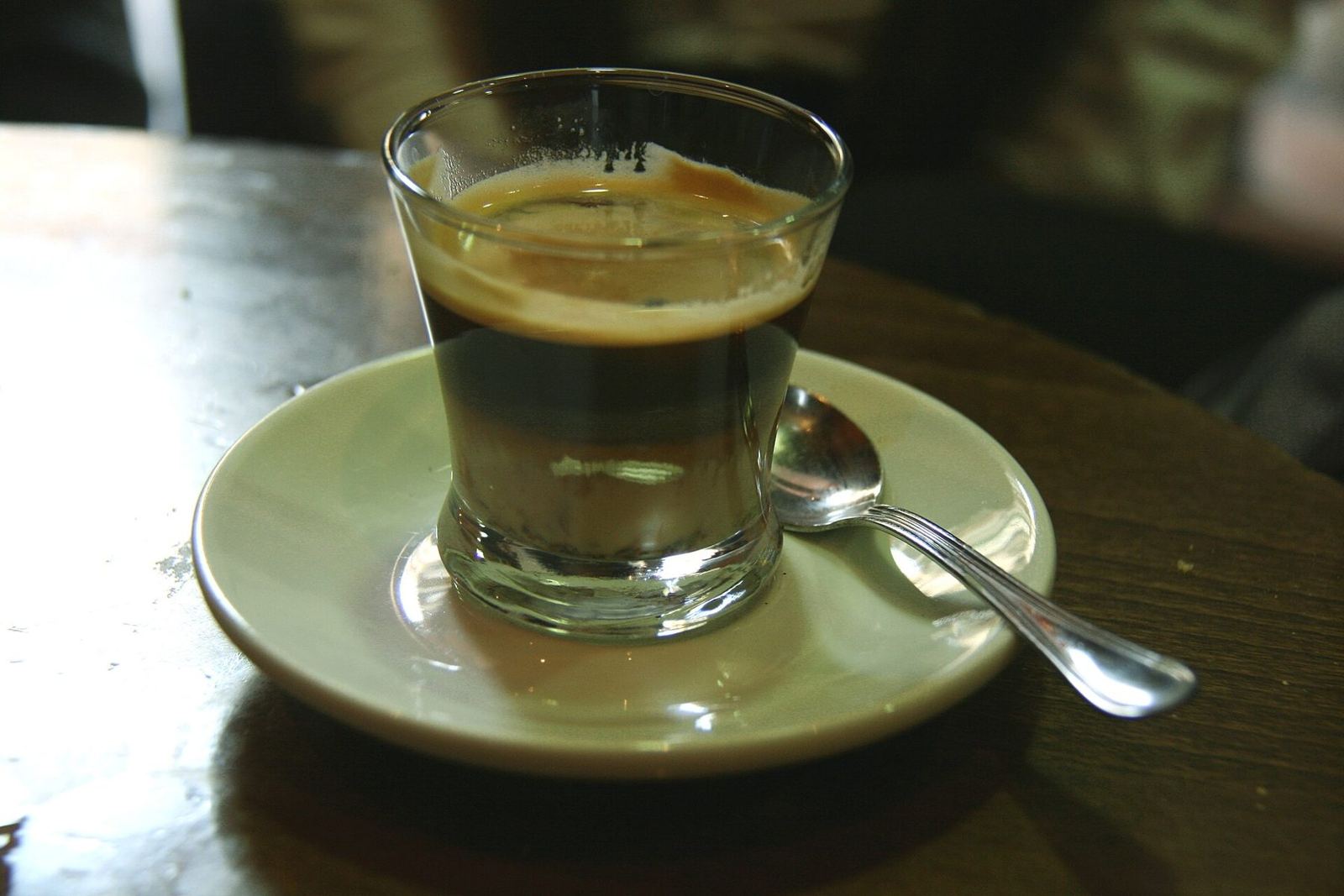
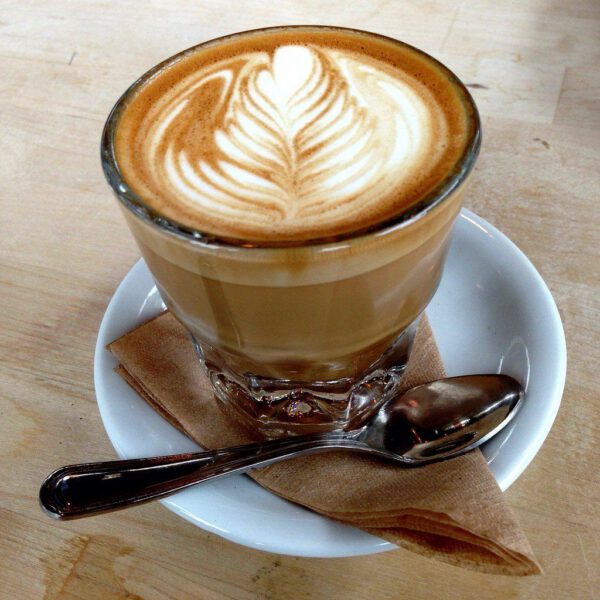
Espresso poured gently over sweetened condensed milk in a small clear glass, so it sits in two neat layers, dark coffee on top and pale, sticky milk below. Stir before drinking. Generally credited to the Valencia region.
ServedHot & Iced
In EnglishEspresso with condensed milk
TastesBold, Creamy, Sweet
About Café Bombón
A café bombón is about as simple as coffee gets: a shot of espresso and a spoonful or two of sweetened condensed milk. Because the condensed milk is much denser, it stays at the bottom when the coffee is poured gently on top, so the drink arrives in a small clear glass with two striking layers, dark brown above and creamy white below.
Before drinking, most people stir the layers together into a thick, caramel-sweet coffee that tastes almost like a dessert. Some prefer to eat the bottom layer with the spoon. The sweetness softens the bitterness of the dark roasts traditionally used in Spanish bars, which is a big part of its appeal.
It is generally said to come from the Valencian Community and is especially common along Spain’s Mediterranean coast, though you can order one in bars across the country. It is often taken as an afternoon pick-me-up or a sweet finish after lunch rather than first thing in the morning.
what’s inside
In the cup
Crema8%
Espresso52%
Sweetened condensed milk40%
Ingredients
Sweetened condensed milk25–30 ml (about 2 tbsp)
Freshly brewed espresso30–40 ml (one shot)
Ground cinnamon or cocoa (optional)A pinch
make it at home
How to make it
You needEspresso machine or moka pot, small heatproof clear glass, teaspoon
RatioRoughly 1 : 1 espresso to condensed milk (some recipes use 2 parts coffee to 1 part condensed milk)
01
Spoon the condensed milk into the bottom of a small clear glass.
02
Brew one espresso (or a short, strong moka-pot coffee).
03
Pour the coffee very slowly over the back of a spoon so it floats on the condensed milk in a separate layer.
04
Serve with a spoon; stir the layers together before drinking.
the story
Origin & history
Spanish food writers generally place the café bombón’s birthplace in the Valencian Community, but nobody has pinned down an inventor or a date, and some sources simply say it comes from ‘in or around Valencia’. It is a bar drink that grew up alongside Spain’s espresso culture in the 20th century rather than something created in one famous café.
A popular explanation for the condensed milk is practical: in hot weather and before refrigerators were common, a tin of sweetened condensed milk kept far better than fresh milk. That is a plausible story rather than a documented fact, but it fits a pattern seen in other warm coffee cultures, from Cuba to Vietnam, where condensed milk became the standard way to sweeten and whiten coffee.
Today the bombón is ordered all over Spain, and regional cousins have grown up around it, notably the barraquito in the Canary Islands and the café asiático in Cartagena, both of which add liqueur to the layers.
same idea, different cup
Variations
Barraquitoa bombón with an added layer of liqueur, usually finished with milk foam, lemon zest and cinnamon (Canary Islands, Spain)
Café asiáticoa layered coffee with condensed milk and liqueur from Cartagena (Region of Murcia, Spain)
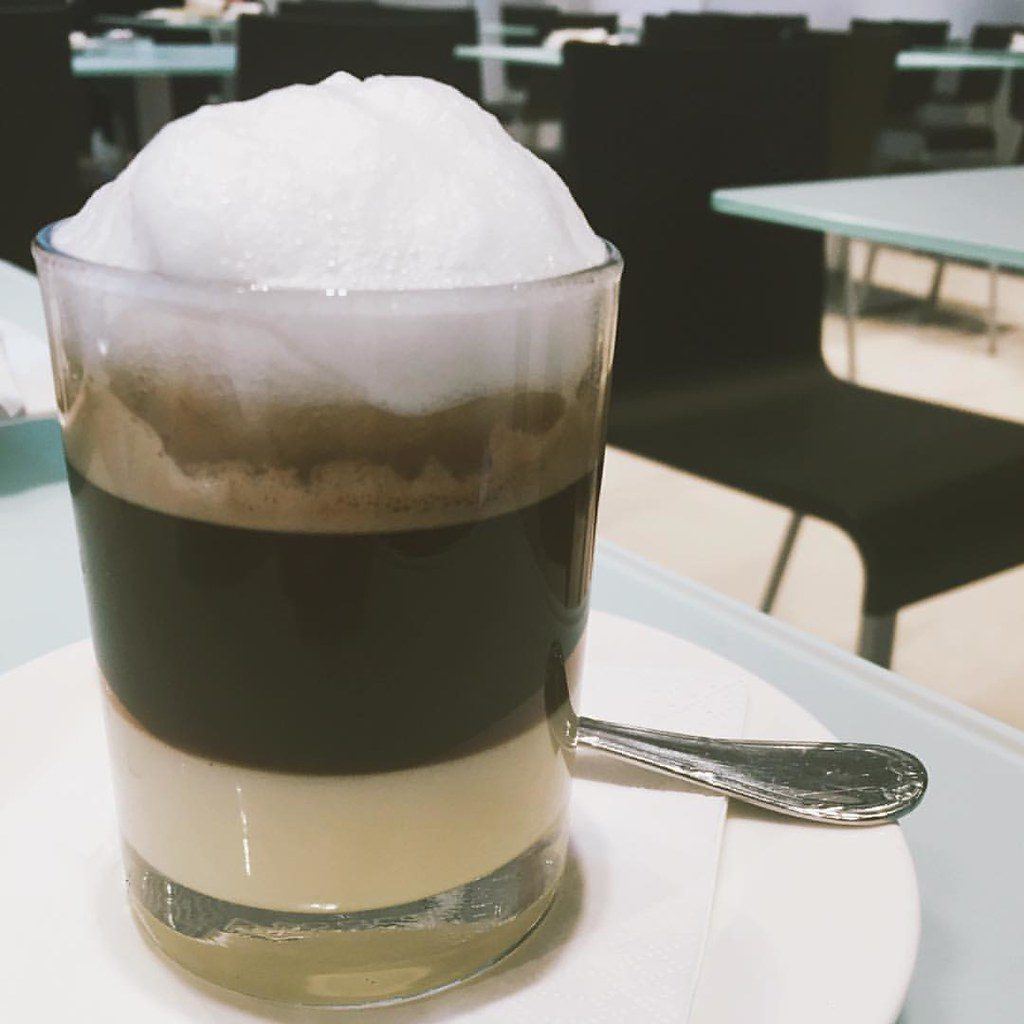
Bombón with foamtopped with milk foam and a dusting of cinnamon or cocoa
Iced bombónpoured over ice in summer, similar in spirit to Vietnamese cà phê sữa đá
like a local
Good to know
Admire the layers first, then stir well: unstirred, the last sip is pure condensed milk.
It is very sweet; if you are not sure, ask for 'poca leche condensada' (a little condensed milk).
At home, pour the espresso slowly over the back of a spoon to keep the layers clean.
In the Canary Islands look out for the barraquito, a layered cousin with liqueur, milk and foam.